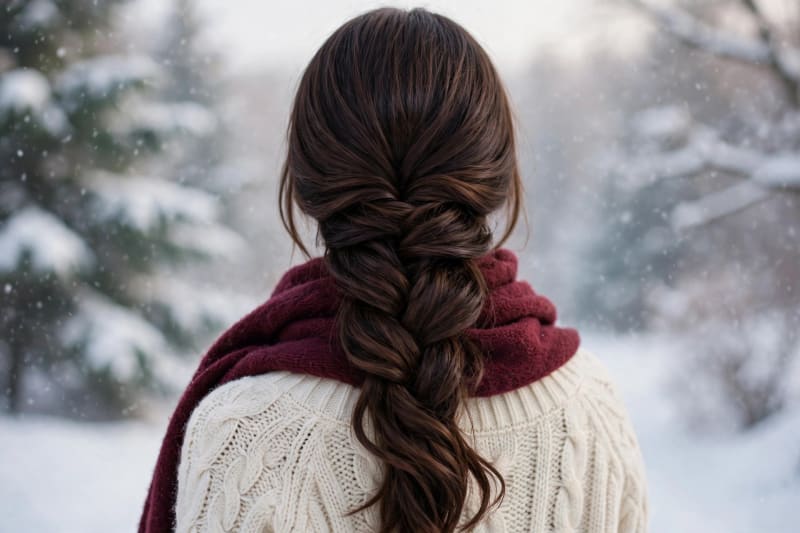
Winter Hairstyles for Long Hair — Ideas to Try for 2027
Discover 24 winter hairstyles for long hair for 2027, from cosy braids and sleek ponytails to glossy blowouts and hat-friendly waves that actually work in cold weather.
Long hair can feel wonderful in winter, and it can also feel like a lot of work. The cold pulls moisture out of the ends, a wool hat can press the crown flat, and dry indoor air can turn smooth strands into a cloud of static. Yet winter also suits long hair in ways no other season does. A braid looks lovely peeking out from under a scarf, a glossy length stands out beautifully against a dark coat, and a neat updo can stay tidy through a windy walk to work.
This guide brings together 24 winter hairstyles for long hair, chosen for how they hold up in real life rather than only for how they look in a photograph. Every idea below has been considered with hats, hoods, scarves, central heating, and cold wind in mind. Some styles protect the ends, some keep hair out of the way, and some simply make the most of shine and movement when the light is low. Where a look needs extra care, a little more time, or a particular hair type, that is mentioned plainly, so you can choose something that fits your routine as well as your taste.
1. Classic Dutch braid with winter scarf
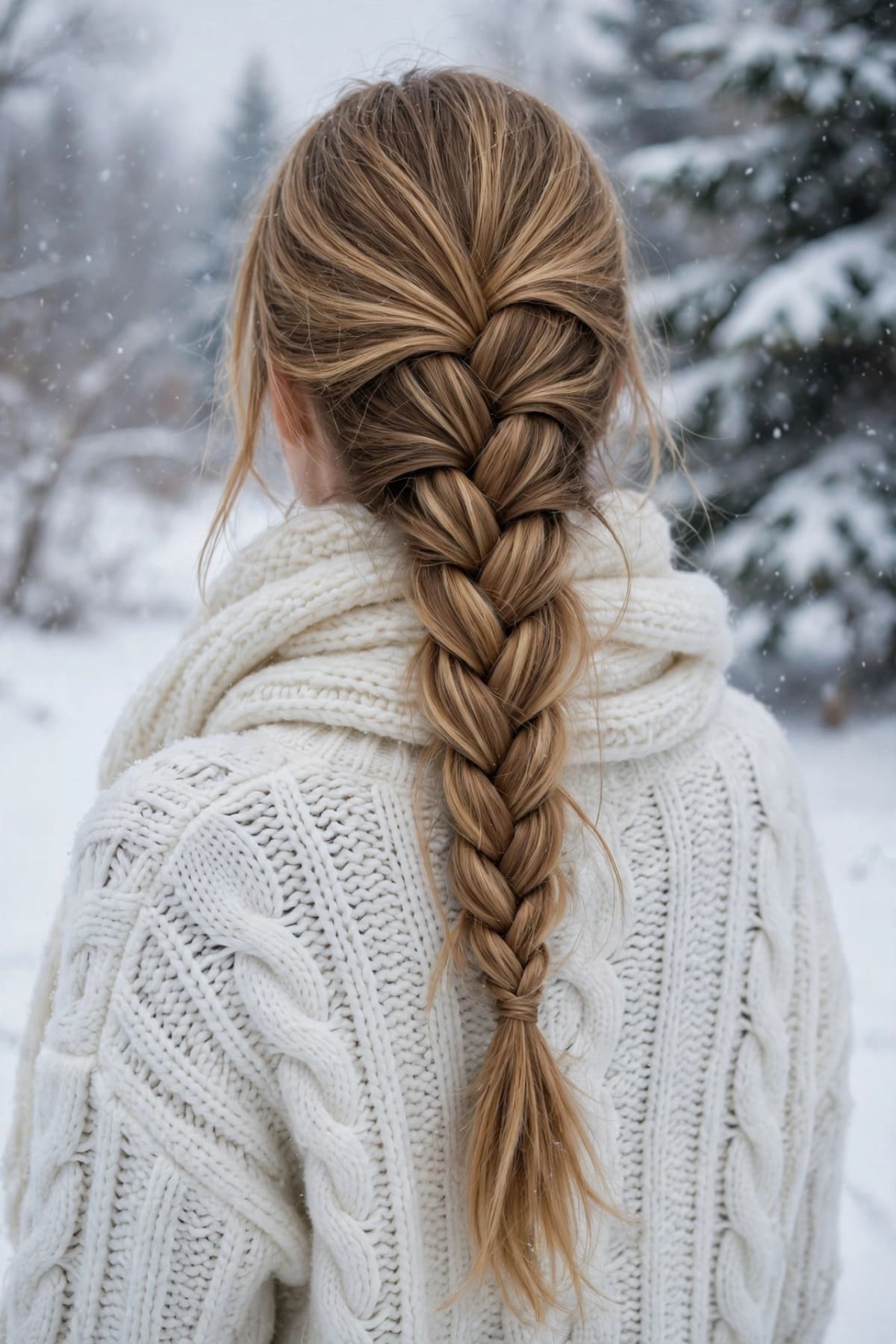
A Dutch braid is one of the most dependable winter styles for long hair, and it is easy to see why. Because the plait is woven underneath rather than over the top, each section sits raised against the head, giving the braid a clear, ribbon-like shape that remains visible even when a scarf is wrapped around the neck. Starting the braid high at the crown also keeps the top of the head looking lifted instead of flattened, while the single thick tail falls neatly down the back and stays comfortable beneath layers of knitwear.
In this version, honey-blonde hair is brushed back without a firm parting, then braided from the crown to the nape in one continuous plait. The finished shape feels polished but not stiff, with just enough tension at the scalp to hold its outline through the day. Paired with a soft white knit, it has a warm, bundled-up quality that suits the season, and the height at the crown helps balance oval, heart-shaped, and longer faces by drawing the eye both upward and downward.
To make it yourself, divide the hair at the crown into three sections and cross each outer section underneath the middle one, picking up more hair from each side as you move down. Finish with a clear elastic, then gently widen the braid by tugging its outer edges — a technique often called pancaking — until it looks full and relaxed. A chunky scarf works well with this style because the braid lies flat enough at the neck to sit underneath it without bunching. Allow ten to fifteen minutes if you are braiding neatly, and keep in mind that very fine hair may loosen at the crown by evening. Hair that was washed the day before usually grips better than freshly washed hair, and a trim every eight to ten weeks helps the tail stay thick enough to braid well.
2. Soft long layers with curtain bangs
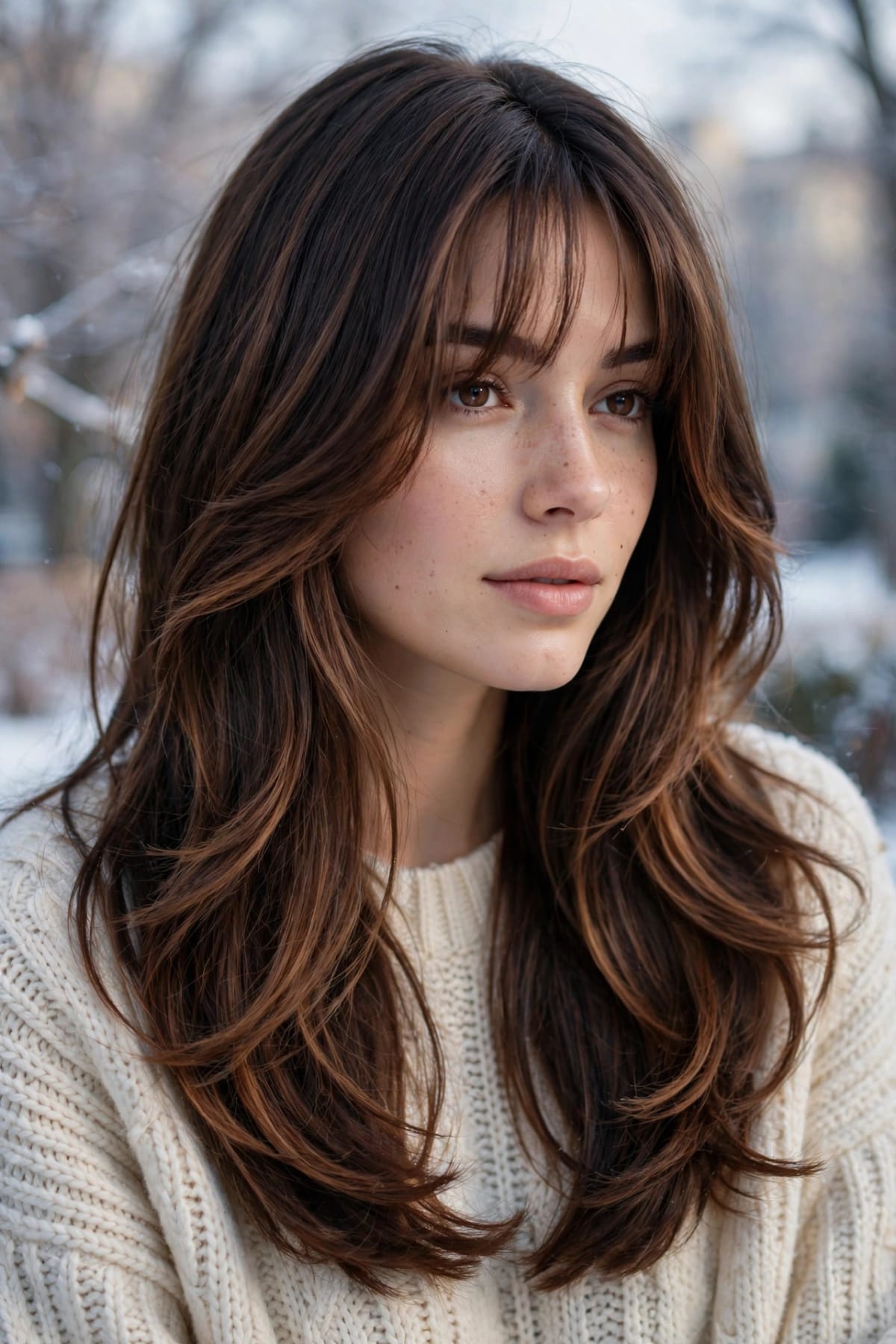
Soft layers and curtain bangs offer a gentler way to wear long hair through winter. The layers start around chin level, so the bottom edge stays thick while the hair around the face gains movement. A centre-parted fringe opens outward on both sides and blends into those front layers, which means it frames the face without looking like a separate, heavy bang.
This version pairs deep brunette hair with warm chestnut balayage through the mid-lengths and ends. The length falls well past the shoulders, and the colour adds a soft glow that looks especially flattering in cold, pale light. The finish is a smooth blow-dry with rounded, slightly flipped ends, giving the hair bounce and shine without making it look over-styled. Because the fringe can be cut wider or narrower, the same idea can be adjusted for many face shapes, softening the cheekbones or adding width where it is wanted.
At the salon, ask for long layers beginning at about chin height, a curtain fringe that blends into the front layers, and chestnut balayage painted through the lengths for dimension without a harsh regrowth line. A round brush is what creates those flipped ends, so it is worth learning the technique at home if you want the look more than once a week. The colour is the low-maintenance part: balayage grows out softly and usually needs only a gloss refresh every few months. The fringe is the part that needs attention, with a trim every four to six weeks to keep its shape. On oily scalps the fringe can separate or fall flat, so a little root-lifting spray or a quick round-brush refresh on the second day often works better than washing daily.
3. Sleek low ponytail with wrapped base
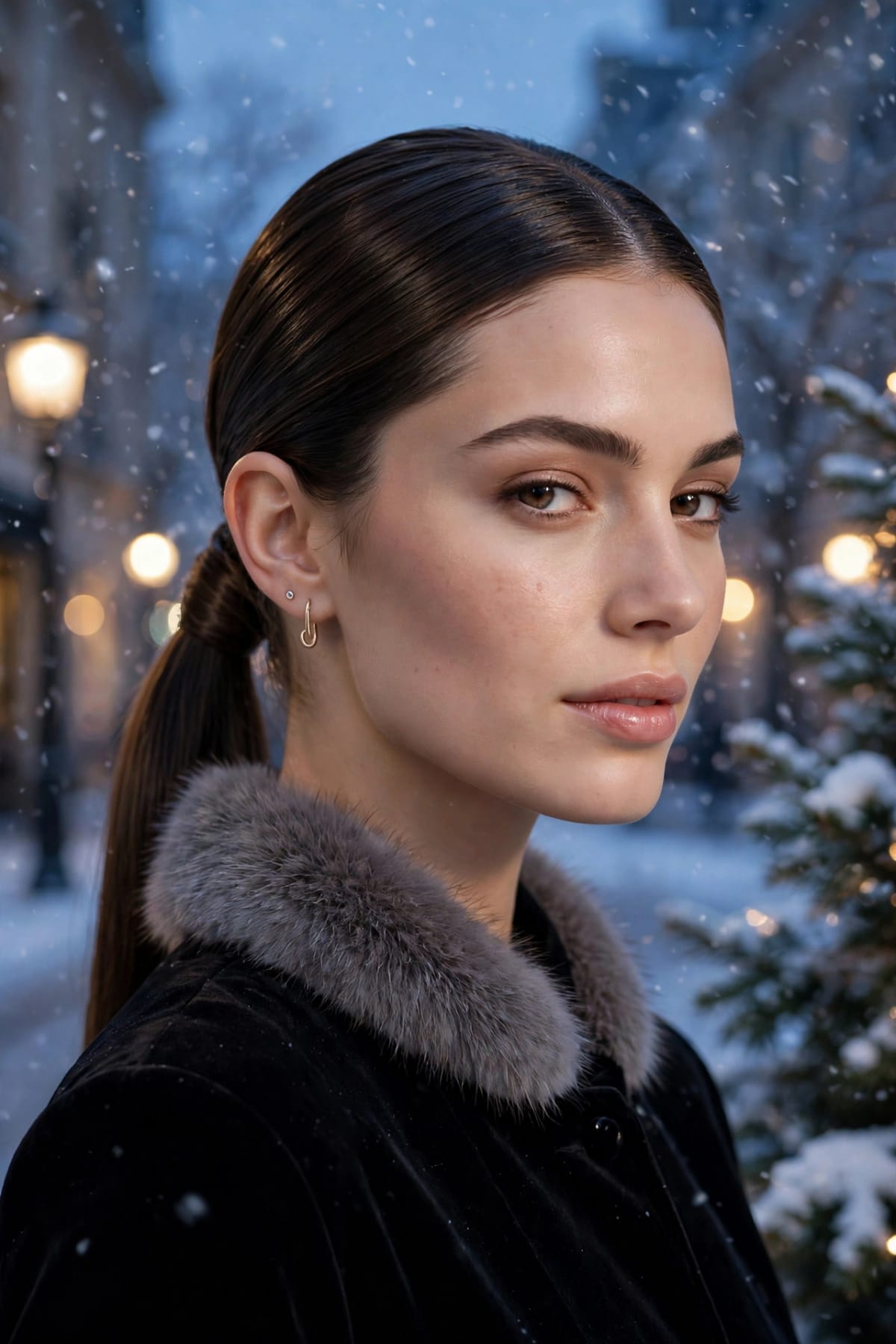
A sleek low ponytail is a simple idea made elegant by two details: perfectly smooth roots and a base wrapped in hair instead of an elastic. Smoothing the hair flat removes the frizz and flyaways that winter air encourages, and hiding the elastic turns an everyday ponytail into a finish that works for the office, a formal dinner, or an evening out. Because the tail sits low at the nape, it also slips neatly under a coat collar.
Here, rich brunette hair is brushed back with no visible parting and gathered low, then a thin strand taken from underneath the ponytail is wound around the base two or three times and pinned underneath. The result is seamless, with a mirror-like shine that catches winter light beautifully. The length hangs straight and clean down the back, which lengthens the silhouette. This shape puts the bone structure on full display, so it tends to flatter strong jawlines and high cheekbones in particular.
The wrapped base is easier than it looks. Secure the ponytail with a thin elastic, take a pencil-width strand from beneath it, wrap it around the base, and fix it with a bobby pin pushed upward so it stays hidden. For the smooth roots, work a boar-bristle brush over a light pomade or gel before gathering the hair; that usually gives lasting hold without stiffness. The main challenge is precision, because bumps at the crown show easily, so smoothing in sections with a mirror behind you helps. Winter static can undo the look quickly, so a little anti-static serum or a light mist of hairspray on the brush before smoothing is often enough. Hair washed the day before tends to stay in place better under tension than freshly cleaned hair.
4. Loose boho fishtail braid
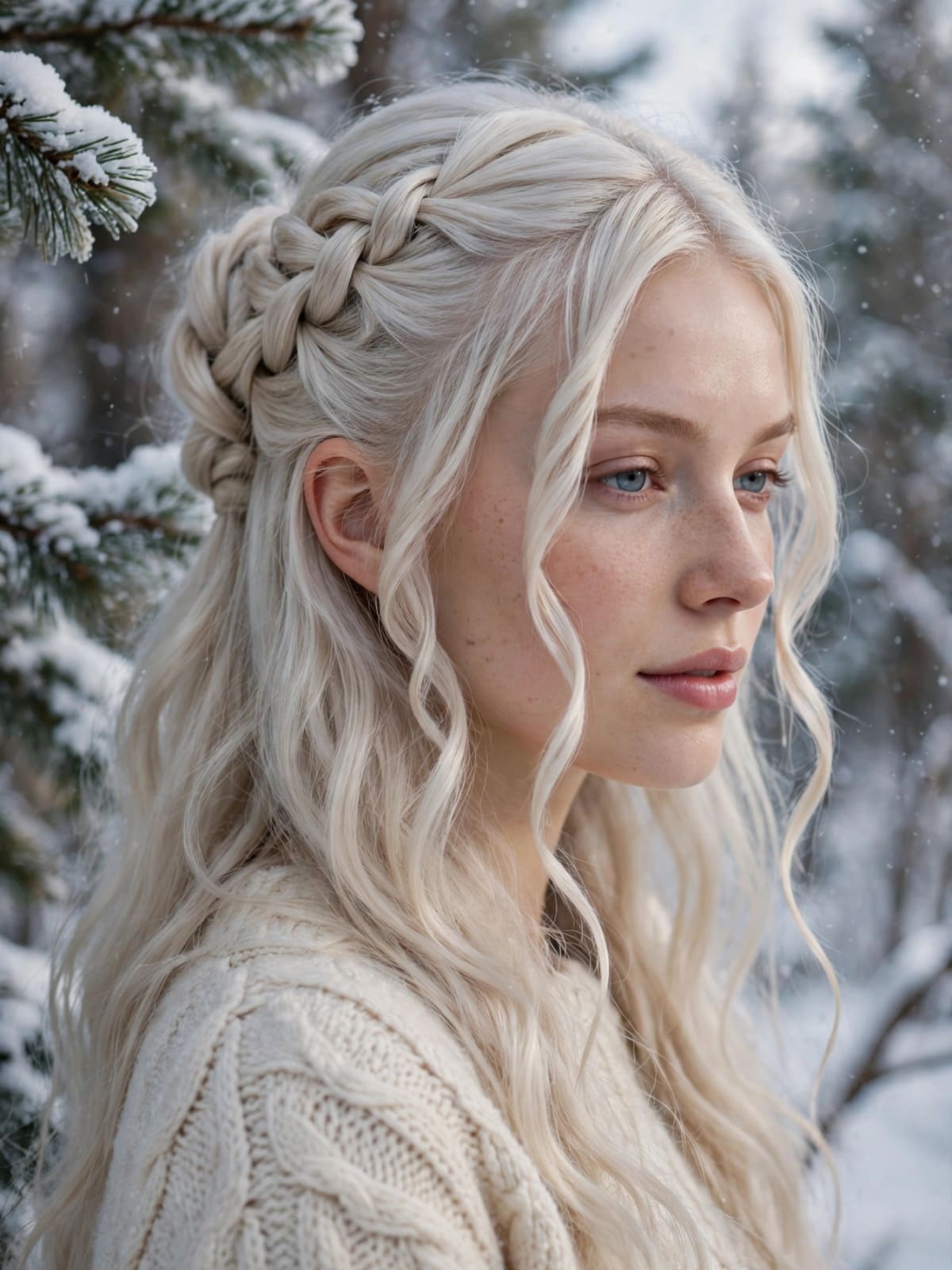
A loose fishtail braid brings a relaxed, bohemian feeling to winter without looking unfinished. In this half-up version, the front of the hair is kept away from the face while the rest falls in long, soft waves, and the woven fishtail rests over the top like a textured detail. The looser stitch gives the braid an organic, hand-made quality, slightly imperfect by design, with gentle pulls that add width.
The style works best on extra-long hair with minimal layering, because the fishtail needs density to read as thick rather than thin. Here, platinum-blonde waves fall past the waist, and the pale colour makes the woven texture stand out clearly. Two twisted sections are pulled back from the front and joined into the fishtail at the crown, which keeps the look soft around the shoulders while still feeling intentional. As a half-up style, it suits almost everyone, since the face stays open and the length keeps its movement.
To build it, twist a two-inch section back from each side of the front, join them at the back of the crown with a clear elastic, then split the gathered hair into two halves and braid in a fishtail pattern, crossing thin slices from the outer edge of one side into the inner edge of the other. Gently widen the finished braid to create that loose, boho fullness, and use a texture spray beforehand so the hair has enough grip to hold the stitch. The trade-off is that a loose fishtail can loosen further over a long day, so it is best suited to a daytime outing or an evening event rather than a very active day. Keeping the front layers long at your next cut will also help the twisted sections from slipping out.
5. Glossy blown-out long hair with face-framing layers
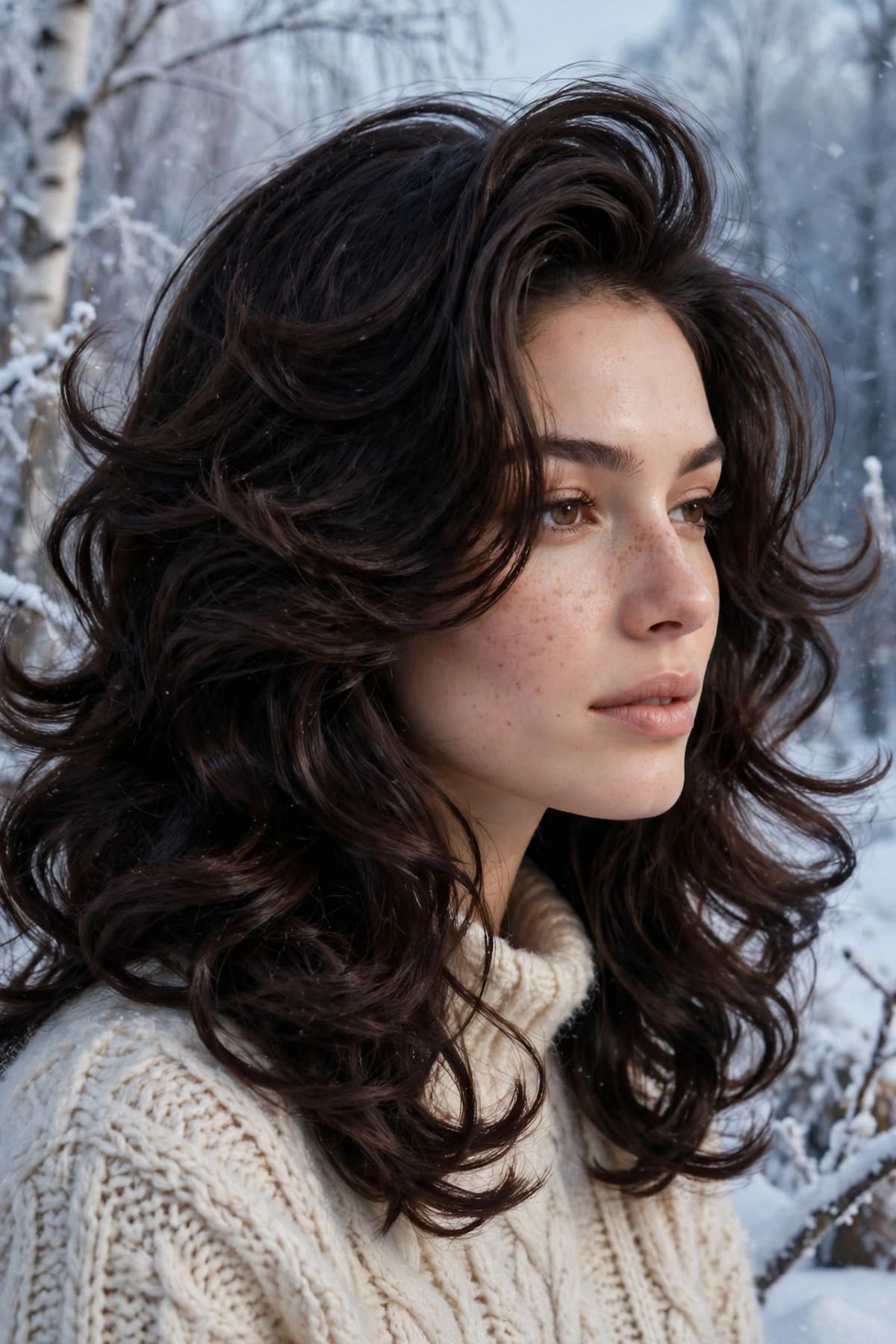
A glossy blowout is a winter essential because it does exactly what cold weather tends to undo: it restores shine and bounce. Indoor heating can leave long hair looking dull, but a smooth, high-shine blow-dry with face-framing layers brings back light and movement without thinning the overall shape. The front layers curve inward toward the jawline, while the ends flip outward with real volume through the lengths.
In this version, long dark brunette hair is blown out until it looks fluid and reflective, with light moving across the layers instead of disappearing into frizz. The layers start low enough that the hair still feels full, and the finish looks rich and polished without feeling heavy. The inward curve of the front layers can narrow the face slightly, while the volume through the ends keeps the silhouette balanced, so the style generally flatters most face shapes.
A salon blowout helps because the round-brush technique — lifting each section at the root and rolling the ends — is what builds both volume and that flipped shape. To ask for it, request face-framing layers with a smooth, high-volume blowout on long hair. At home, a large-barrel round brush and a concentrator nozzle on the dryer come closest, and a weekly deep-conditioning mask through winter helps protect the shine that dry air strips away. The main drawback is longevity: a blowout this smooth often collapses by day two or three on fine hair, and re-blowing it daily adds heat damage over time. Dry shampoo at the roots on the second day, a quick brush-through, and a silk pillowcase overnight can help stretch it further.
6. Milkmaid braids for winter
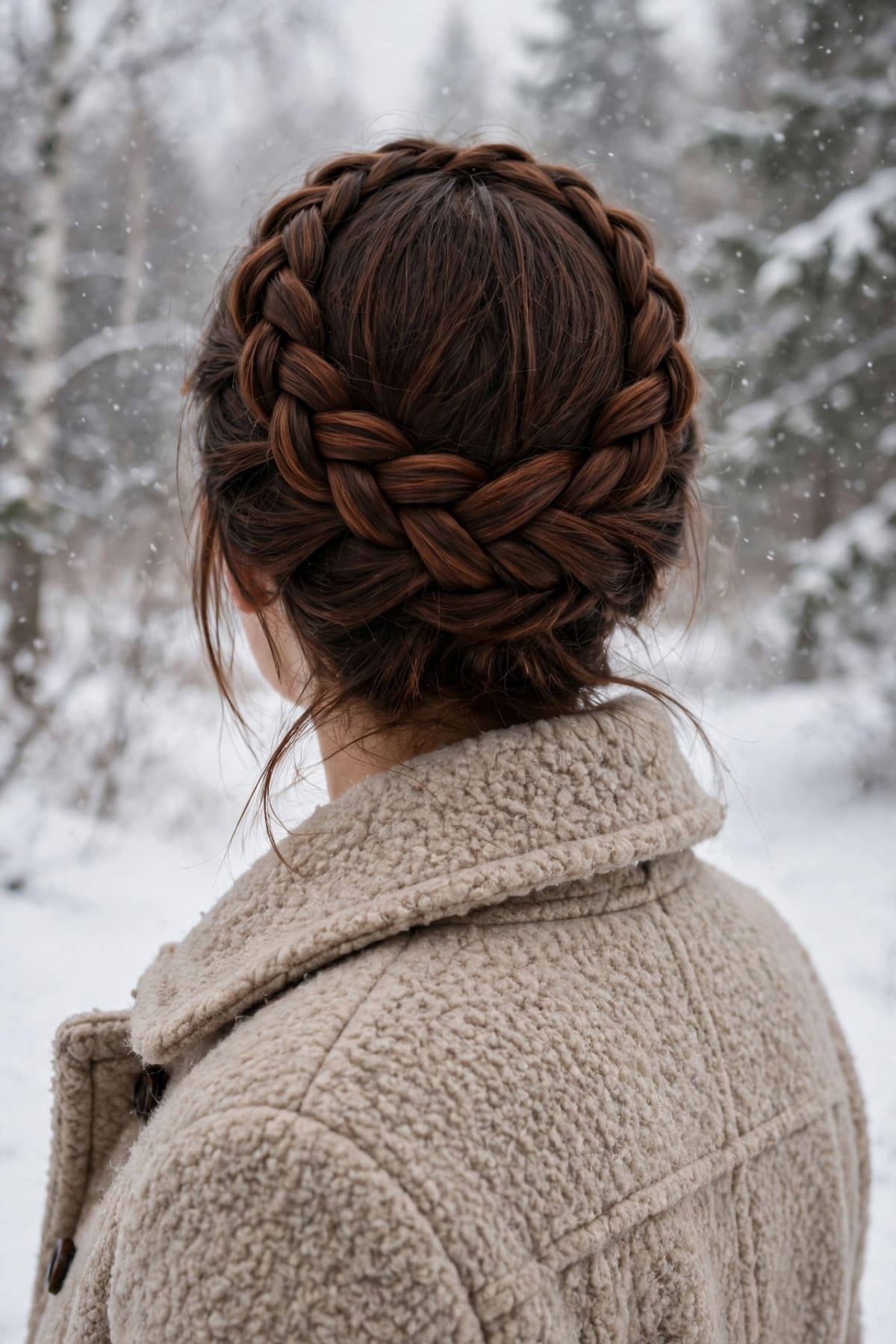
Milkmaid braids are one of the most practical winter styles for long hair, because they lift every end off the neck. With two braids wrapped up and over the head like a crown, nothing dangles to catch the wind, snag on a coat collar, or pick up static from a hat. The coiled shape still looks elegant from every angle, so the style solves a winter problem without looking purely functional.
In this version, brown hair is braided into two plaits that coil all the way around the head with a slightly loose, hand-worked texture — neat enough to look deliberate, soft enough to avoid stiffness. The woven stitches catch the winter sun and give the crown real dimension from the back and sides. Because all the hair is lifted away from the neck, hats sit comfortably over the style and scarves stop catching loose ends, while the silhouette remains polished.
To create it, part the hair down the middle, braid each side into a regular three-strand plait from just above the nape, and secure the ends with clear elastics. Cross each braid over the top of the head and pin along its length, tucking the bobby pins into the weave. Matching the pin colour to your hair helps them disappear into the braid. The trade-off is the number of pins: very long or thick hair can need a dozen or more to hold securely, and the crown can feel tight if pinned too aggressively. Braiding on second-day hair with a touch of texturising spray helps the pins grip, and longer layers are easier to tuck away than short face-framing pieces, so ask your stylist to keep the perimeter long if you reach for this style often.
7. Long beach waves with middle part
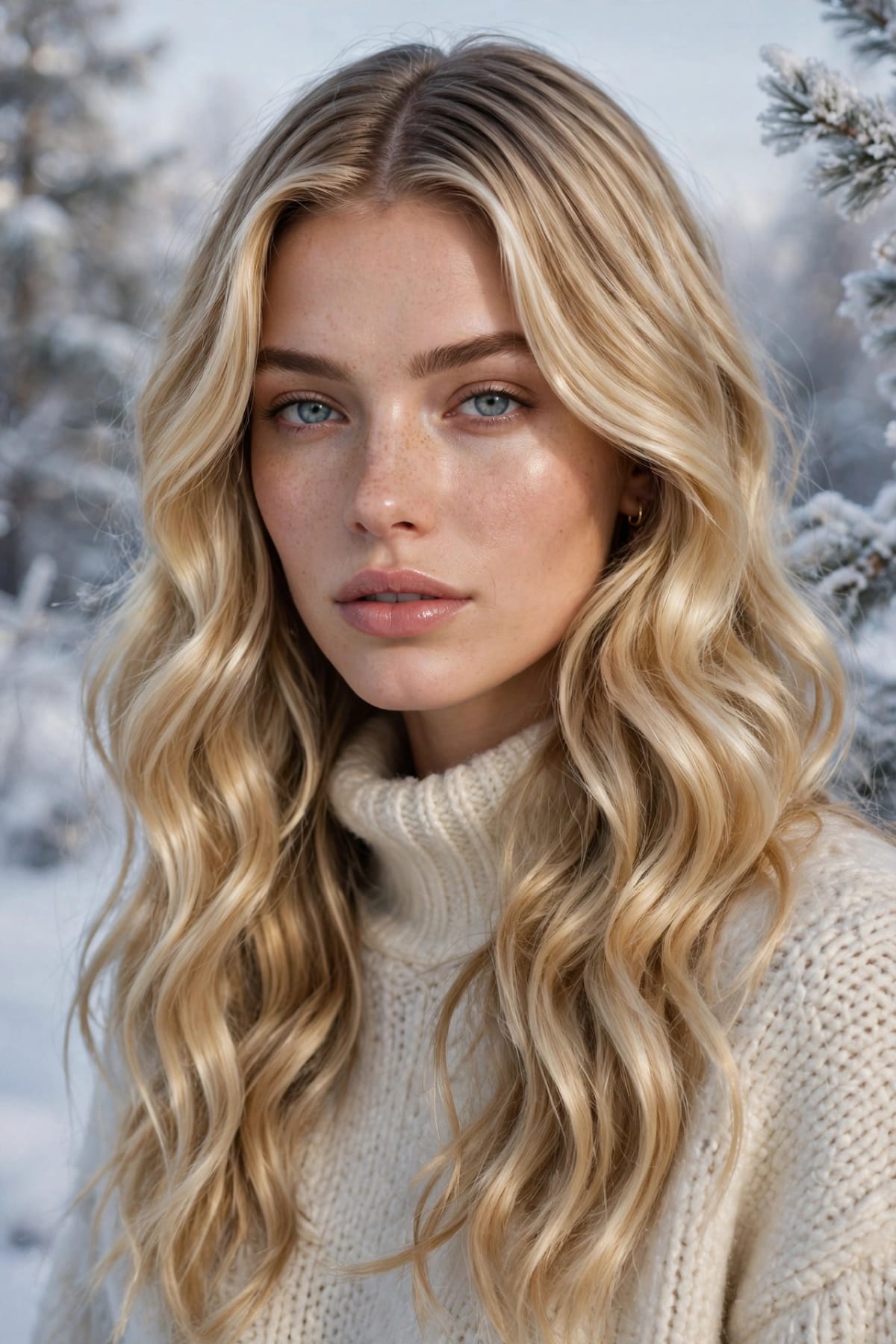
Beach waves can translate surprisingly well to winter when they are kept glossy and defined rather than sun-dried and matte. Long blonde hair is parted down the middle and styled into soft, elongated S-waves that fall past the shoulders with a salon-smooth finish. Lighter ends catch the light through each bend, so the colour does much of the work, while the middle part keeps the look symmetrical and modern. Because the waves begin below the root area, the crown stays smooth while the movement lives through the lengths.
This style tends to suit medium-to-thick hair best, since the waves need enough density to hold their shape, and it flatters longer and oval face shapes by keeping width low and length high. The overall effect is relaxed but polished, not windblown, which is what makes it work in winter rather than looking like a summer style worn out of season.
The classic technique is to alternate the curling direction with a large-barrel iron, then brush the curls out once they have cooled so they melt into soft waves instead of tight ringlets. Heat protectant is essential with this much heat on long hair. In winter, dry indoor air is the main enemy of the look, so a light shine serum through the ends helps keep the waves from turning frizzy or static-prone. The trade-off is longevity: middle-parted waves can fall flat at the roots overnight, so sleeping in a loose top bun or wrapping the hair in a silk scarf helps preserve the shape. If your hair is naturally straight, these waves usually last a day; on naturally wavy hair, they can stretch to two or three days with a refresh of texturising spray.
8. High voluminous ponytail with soft curls
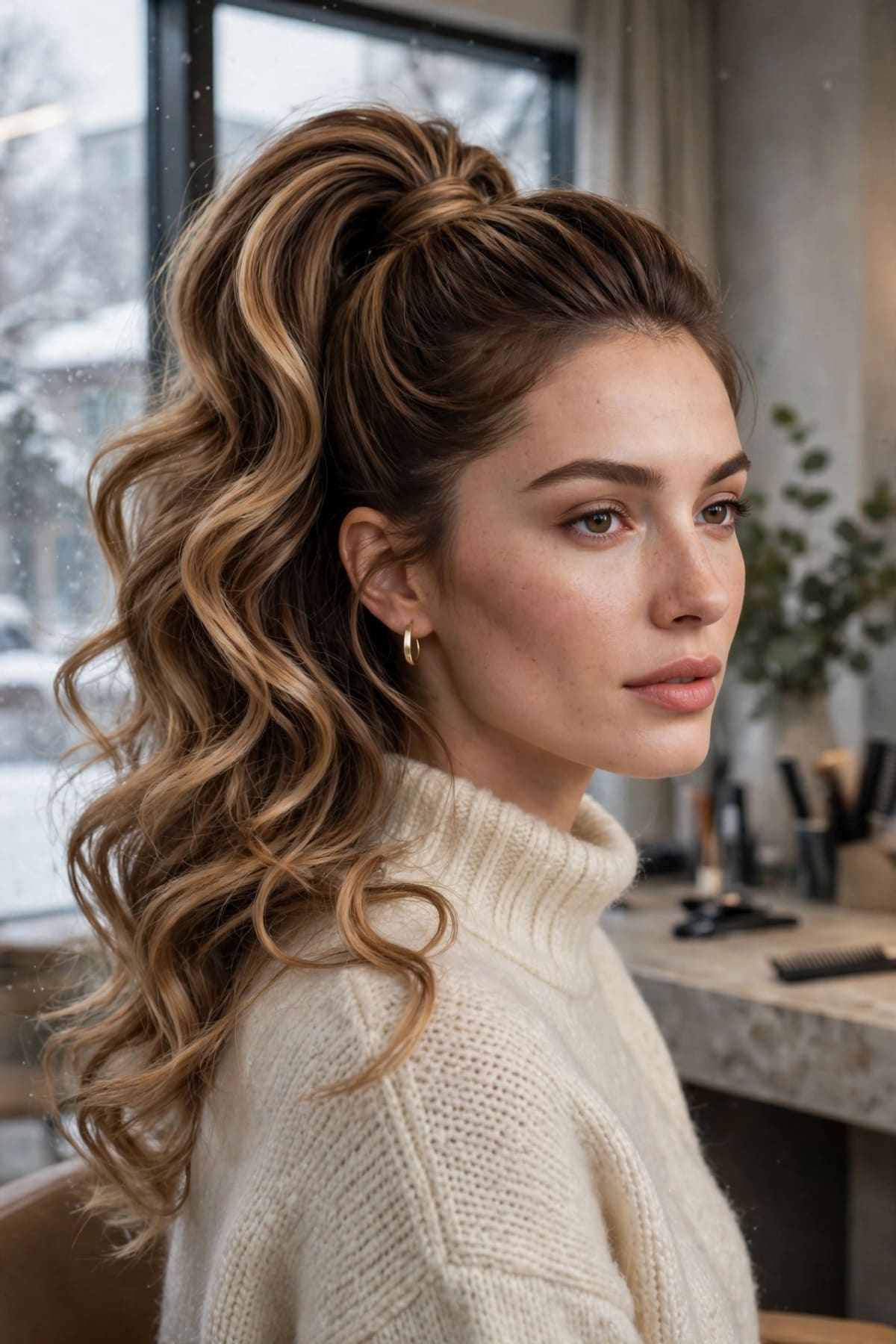
A high, voluminous ponytail is a dramatic winter option that gives the impact of an updo without its formality. Gathering the hair at the crown creates instant height, and curling the tail into soft, separate waves adds bounce and lift that a straight ponytail cannot match, even under a winter hat. The sides are smoothed sleek for contrast, which makes the curls look even fuller by comparison, and a few curled face-framing pieces soften the transition at the front.
Here, the tail cascades down in soft, defined curls, with lighter balayage ribbons running through the lengths so each curl reads separately instead of blending into one heavy column of hair. The crown height lengthens the face, so the style generally suits round and oval face shapes best, and the curled volume works hardest on medium-to-thick hair that can hold a curl.
To build the volume, flip your head upside down to gather the ponytail as high as possible — the higher the base, the more lift — and secure it with a strong elastic, or two interlocked elastics for very heavy hair. Curling the tail after it is gathered tends to be faster and keeps the curls uniform; finish by backcombing lightly at the base of the tail and smoothing the outer layer over it. The trade-off is tension: a high, tight ponytail can cause headaches or stress at the hairline if worn daily, so it is best kept as an occasion style rather than an everyday one. Varying the position slightly from day to day helps avoid breakage in the same spot, and switching to a spiral tie instead of a tight elastic can reduce denting on second-day hair.
9. Romantic Twisted Half-Updo with Soft Cascading Waves
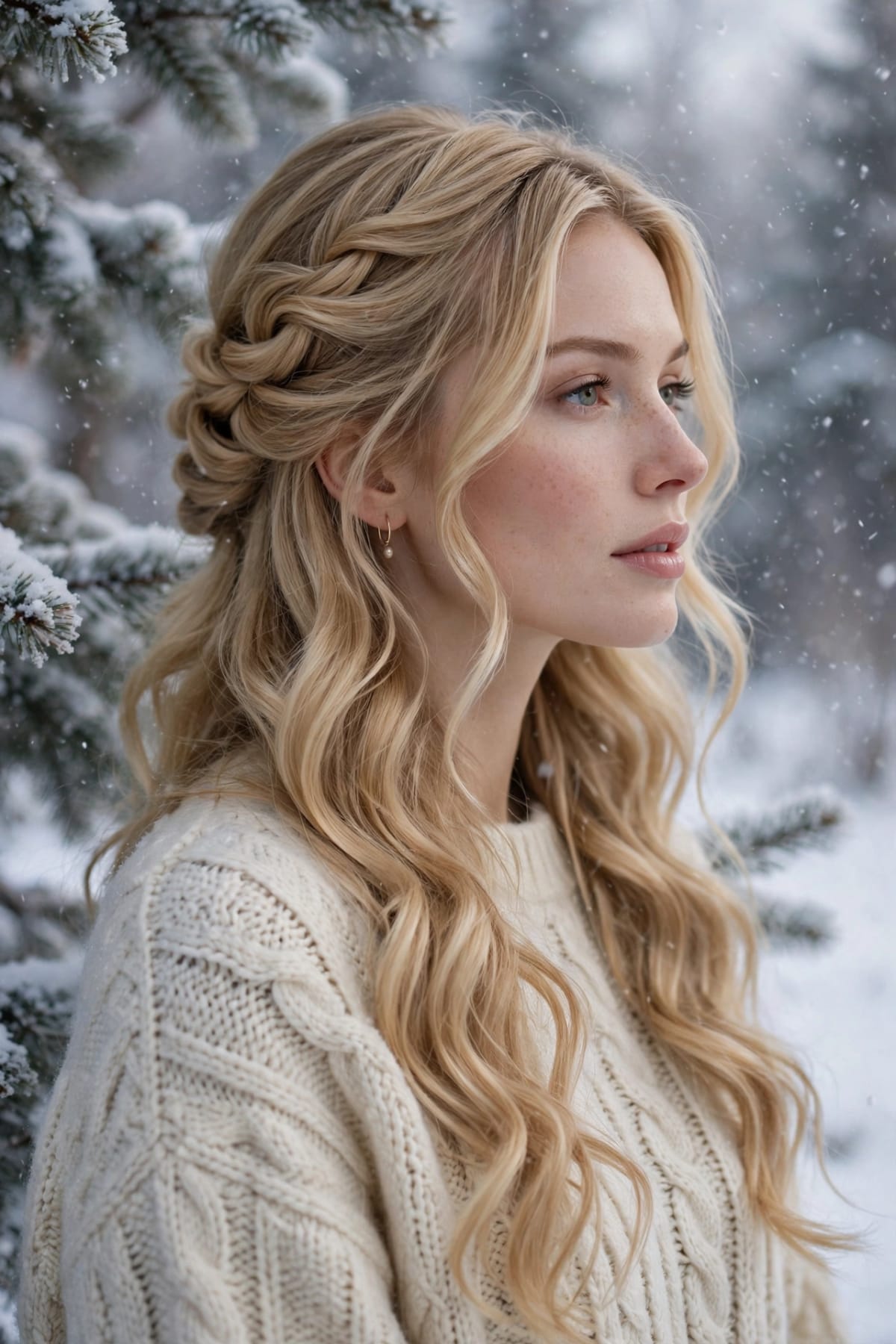
A romantic twisted half-updo is a lovely choice for winter occasions, because it lifts the crown and keeps the front sections away from the face while leaving the long, polished waves below loose and luminous. The front pieces are swept back into soft, rope-like twists and pinned at the crown, while the remaining length falls well past the shoulders in defined waves. Warm blonde tones with lighter highlights catch the light as the waves move, giving the style a soft, glowing finish that still survives a coat and scarf.
It tends to flatter medium-to-thick long hair and suits oval, heart-shaped, and long face shapes especially well, since the lifted crown adds balance and the loose front softens the face. The overall feeling is romantic without being overly formal, which makes it a natural fit for winter parties, dinners, and celebrations.
To create it, curl the hair in sections with a 1.25-inch iron, then twist one section from each temple and secure them at the back with bobby pins or a small clear elastic. A salon blowout can help because it builds the smooth, long-lasting wave pattern this style relies on. For a salon appointment, ask for a romantic half-up with twisted front sections and soft waves. Expect around twenty to thirty minutes of styling, and keep a travel-size hairspray on hand, as twists can loosen in wind or damp winter air. The main trade-off is longevity against softness: pin the twists tighter and the style lasts longer, but the dreamy effect comes from keeping them slightly loose.
10. Long Straight Hair with Blunt Healthy Ends
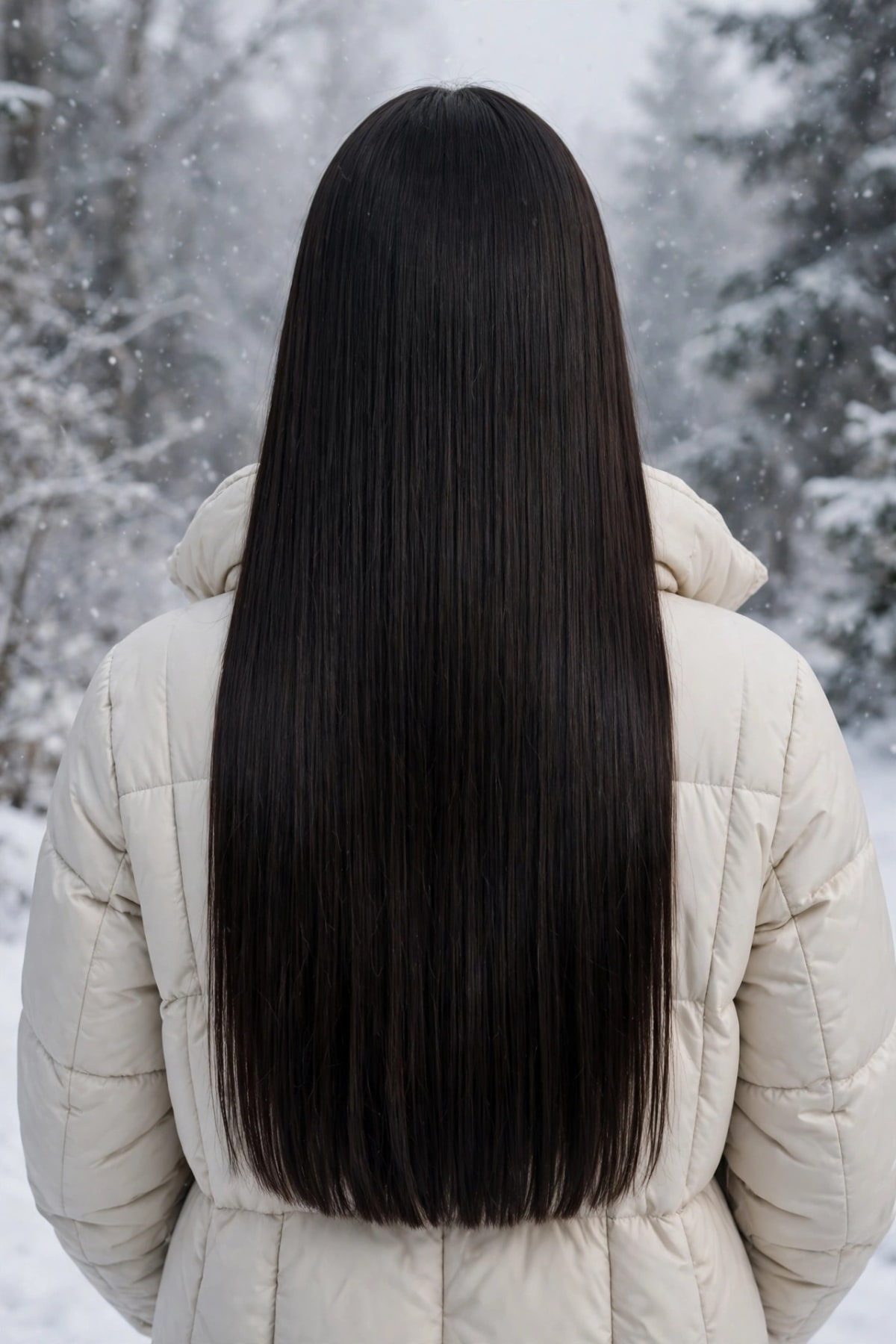
Long, straight hair with blunt ends makes a quiet but powerful winter statement. Cut to a single clean line with no layering to thin the ends, the hair forms a heavy, mirror-like curtain that looks fuller and glossier than layered cuts at the same length. The strong horizontal line at the ends adds visual width, which can be especially flattering on oval and oblong faces, while those with very round faces may prefer a centre or off-centre part to keep the look from widening the face.
Nothing reads as healthy in winter quite like this finish. The unlayered perimeter makes the ends look thick and glassy, and the smooth curtain photographs beautifully in winter light while needing almost no product to hold its shape. It suits naturally straight or straightened hair best, and the simplicity of the cut is part of its appeal — there is nowhere for unevenness to hide, so the condition of the hair becomes the whole story.
The salon request is simple but precise: a one-length cut with blunt ends, trimmed evenly all the way around, ideally with a gloss treatment for extra shine. Daily styling usually means a flat iron and heat protectant, so this is a commitment to heat tools, and a good protectant plus weekly deep conditioning matters. Plan trims every eight to ten weeks to keep the edge crisp. The honest trade-off is that blunt ends show every bit of damage, so split ends and winter dryness are more visible here than in layered styles. In return, the look photographs beautifully and needs almost no product to hold its shape.
11. Bubble Ponytail with Satin Ribbon Ties
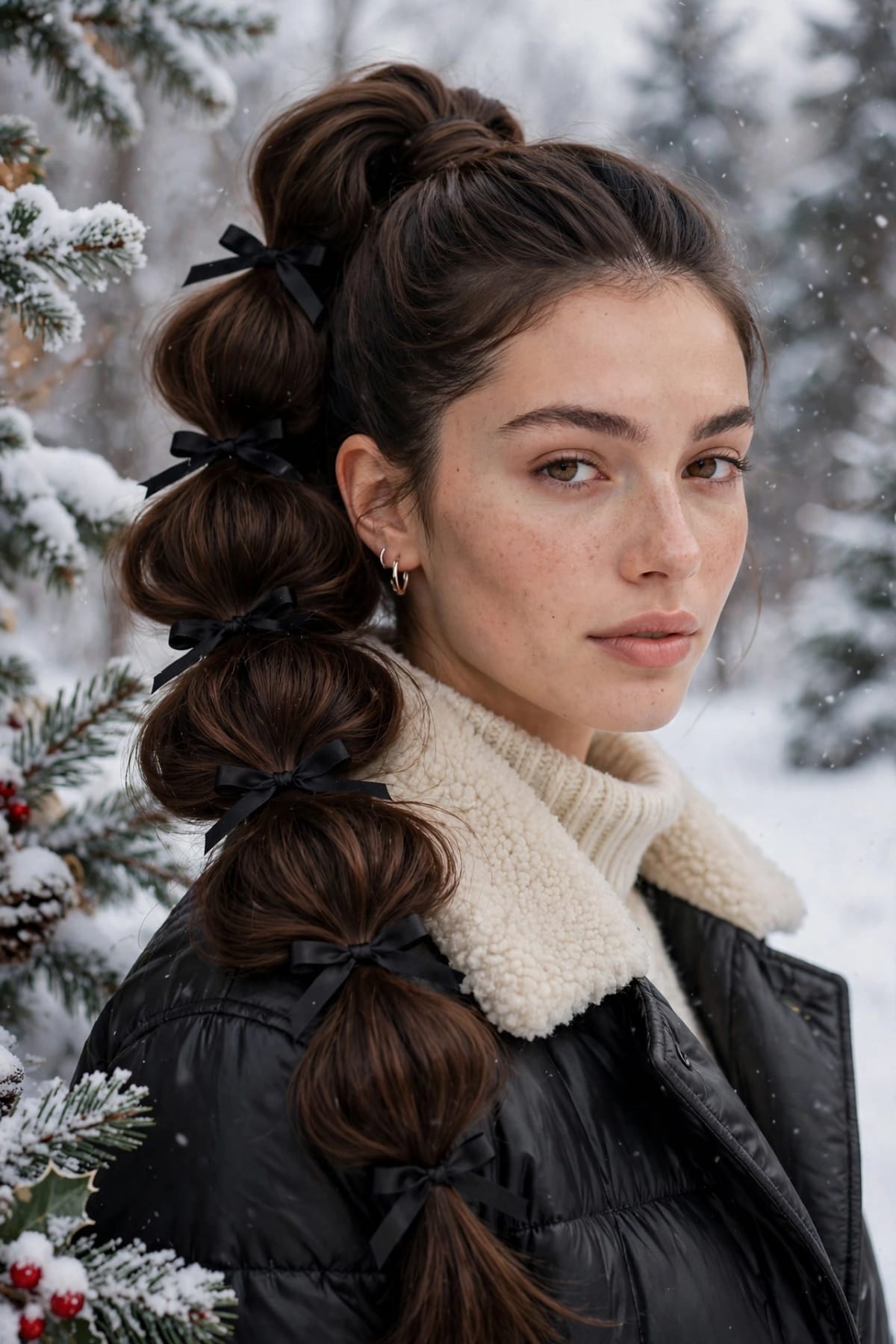
A bubble ponytail turns a basic low pony into something festive. The tail is sectioned into rounded, puffed bubbles, with a small black satin ribbon bow tied at each elastic. The crown stays sleek and smooth, so the playful detail reads as polished rather than childish. With dark brunette lengths, the ribbon bows stand out beautifully, and the long tail keeps the look elegant.
It suits long, medium-density hair — straight or gently wavy — and works for holiday parties, winter evenings out, and any occasion where a regular ponytail would feel too plain. Those with very short or fine hair may find the bubbles hard to plump without extensions or padding, but on the right length it is one of the easiest styles in this collection to achieve.
Technique-wise, gather the hair into a low ponytail, place small clear elastics every two to three inches, then gently tug each segment wider to create the bubble shape before tying a ribbon at each band. A smoothing serum or light gel on the crown keeps flyaways in check. Upkeep is minimal — it is very much a wear-it-and-go style — but elastics can snag fine hair on removal, so tease them out gently rather than pulling. The ribbon is the detail to weigh: it elevates the style instantly, yet satin bows can loosen and need retying after a few hours, so carry a spare ribbon if you are heading to a long event.
12. Side-Swept Long Hair with Soft Voluminous Waves
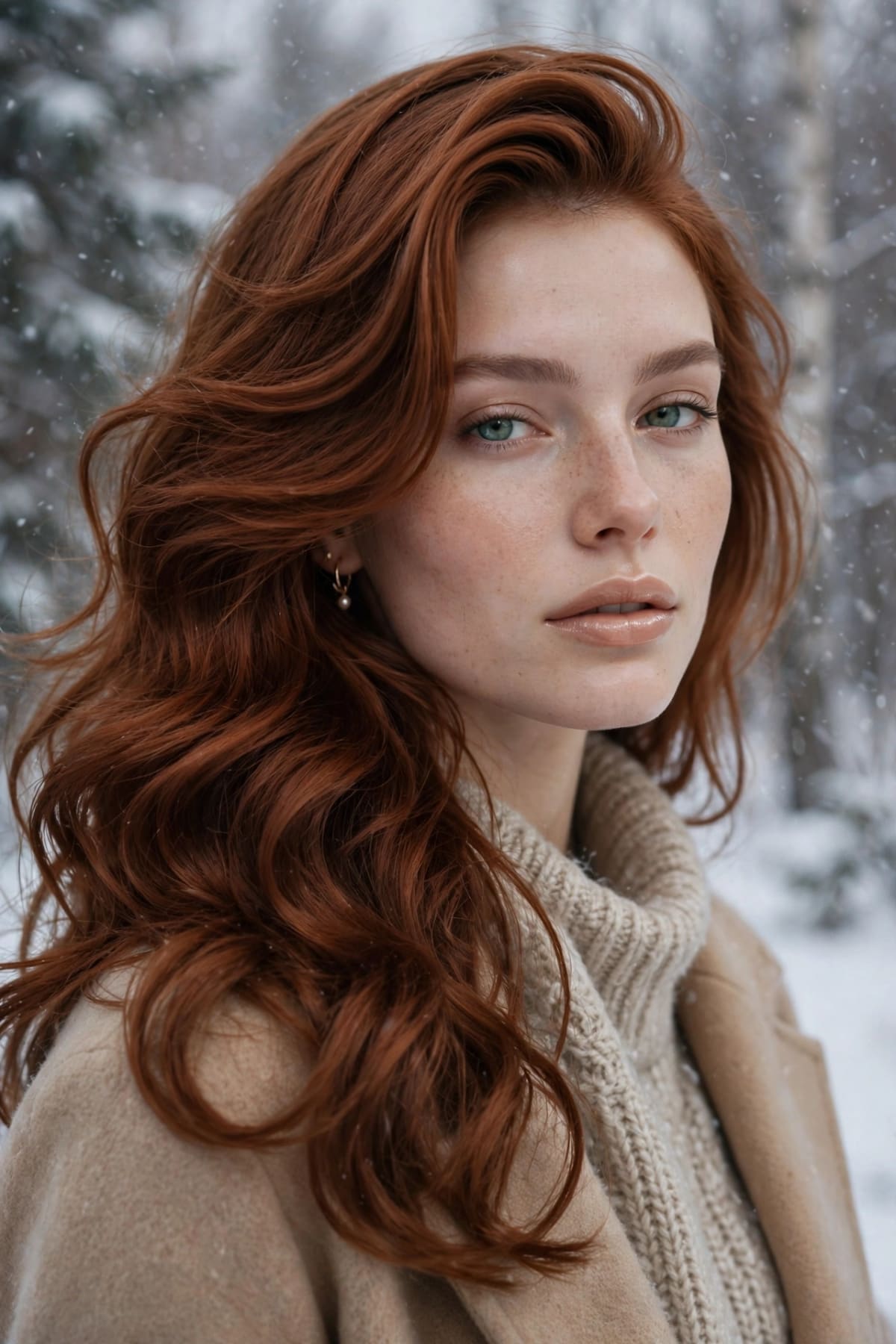
A deep side part and long, soft waves swept over one shoulder create one of winter's most glamorous silhouettes. The hair is long and voluminous with a rich auburn tone, and the sweeping direction gives the style drama and movement that a centre part cannot. The asymmetric fall draws the eye diagonally, which tends to flatter round and square faces by breaking up width, and it adds softness for anyone who finds a severe middle part too harsh. The glossy, touchable wave pattern keeps the look romantic rather than retro.
The volume at the roots and the smooth wave pattern are the heart of this style. A salon blowout can help, because that lift is hard to replicate on freshly washed, flat hair — ask for soft, voluminous waves with a deep side part. At home, use a large-barrel curling iron, brush the curls out for softness, and finish with a shine serum. The realistic trade-off is maintenance through the day: waves relax by evening, and fine hair may need a texturising spray to hold the sweep. Pinning the tucked side discreetly behind the ear with a bobby pin keeps the style intentional instead of sliding back to the centre, and a light mist of flexible-hold spray helps the shape last without feeling stiff.
13. Braided Crown with a Warm Blonde Finish
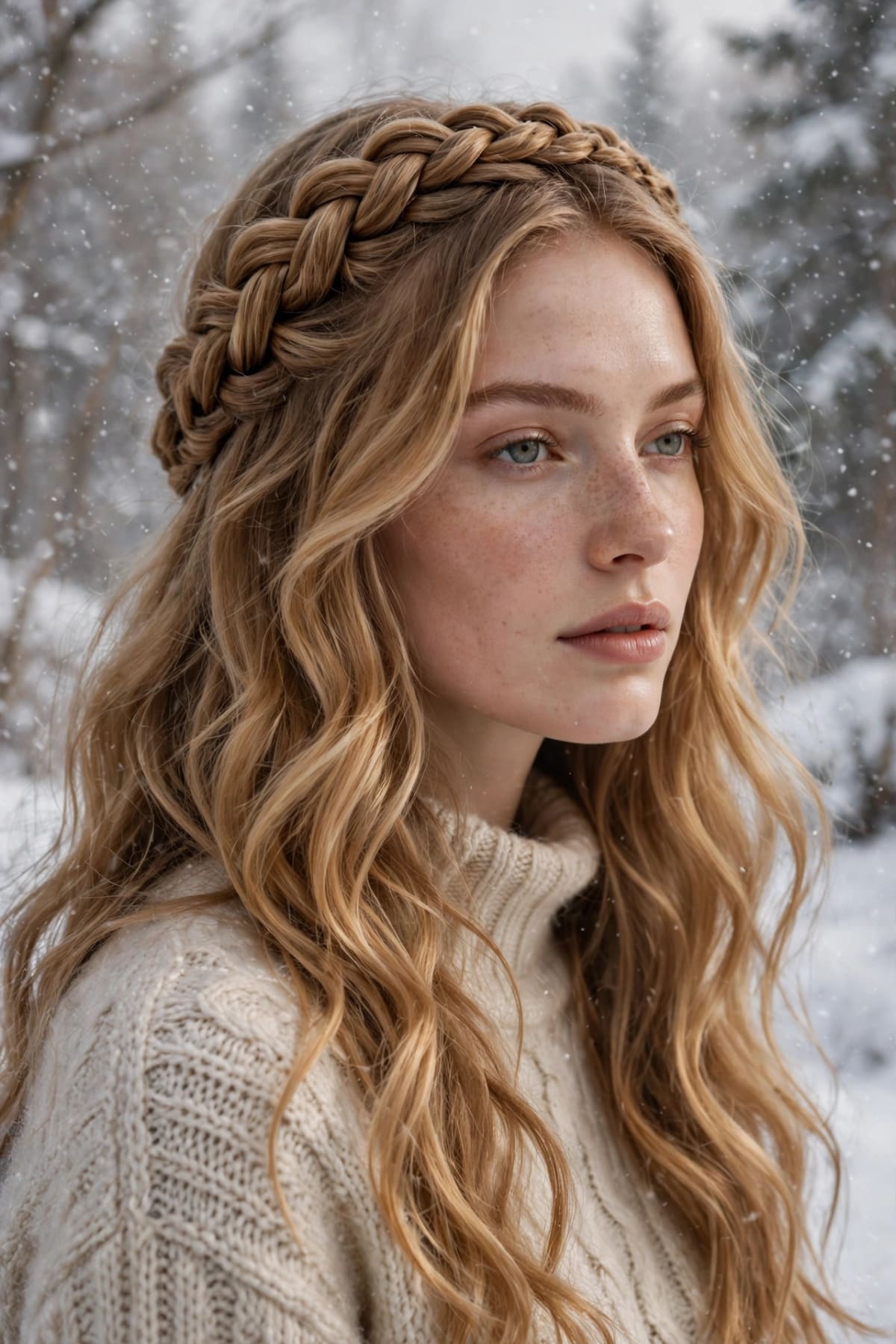
A braided crown — sometimes called a milkmaid or halo braid — runs a thick plait across the crown like a headband, with the remaining length left loose in soft waves below. In warm blonde tones with lighter woven-through pieces, the braid's texture shows beautifully, and the long wavy lengths keep the look romantic rather than severe. Because the face is framed by the braid and the rest of the hair falls free, it is a natural pick for winter events: holiday galas, weddings, and formal dinners where something prettier than a basic down style is wanted.
It suits those with long, medium-to-thick hair; finer hair can still work but may need padding or extensions to achieve the full, substantial braid. The warm blonde finish adds softness and light, and the combination of a structured crown with loose waves gives the silhouette both polish and movement.
The classic technique is two Dutch braids — one from each side — wrapped over the crown and pinned in place, though a single long braid coiled around the head works too. For the salon, request a milkmaid crown braid with a soft, textured finish. Styling on slightly lived-in or texturised hair holds better than squeaky-clean strands, so dry shampoo or texture spray is your friend. The trade-offs are time and grip: building a secure crown takes patience and plenty of pins, and very silky hair may need extra anchoring to survive a long evening. Done well, though, it stays put for hours with no touch-ups.
14. Messy High Bun with Face-Framing Strands
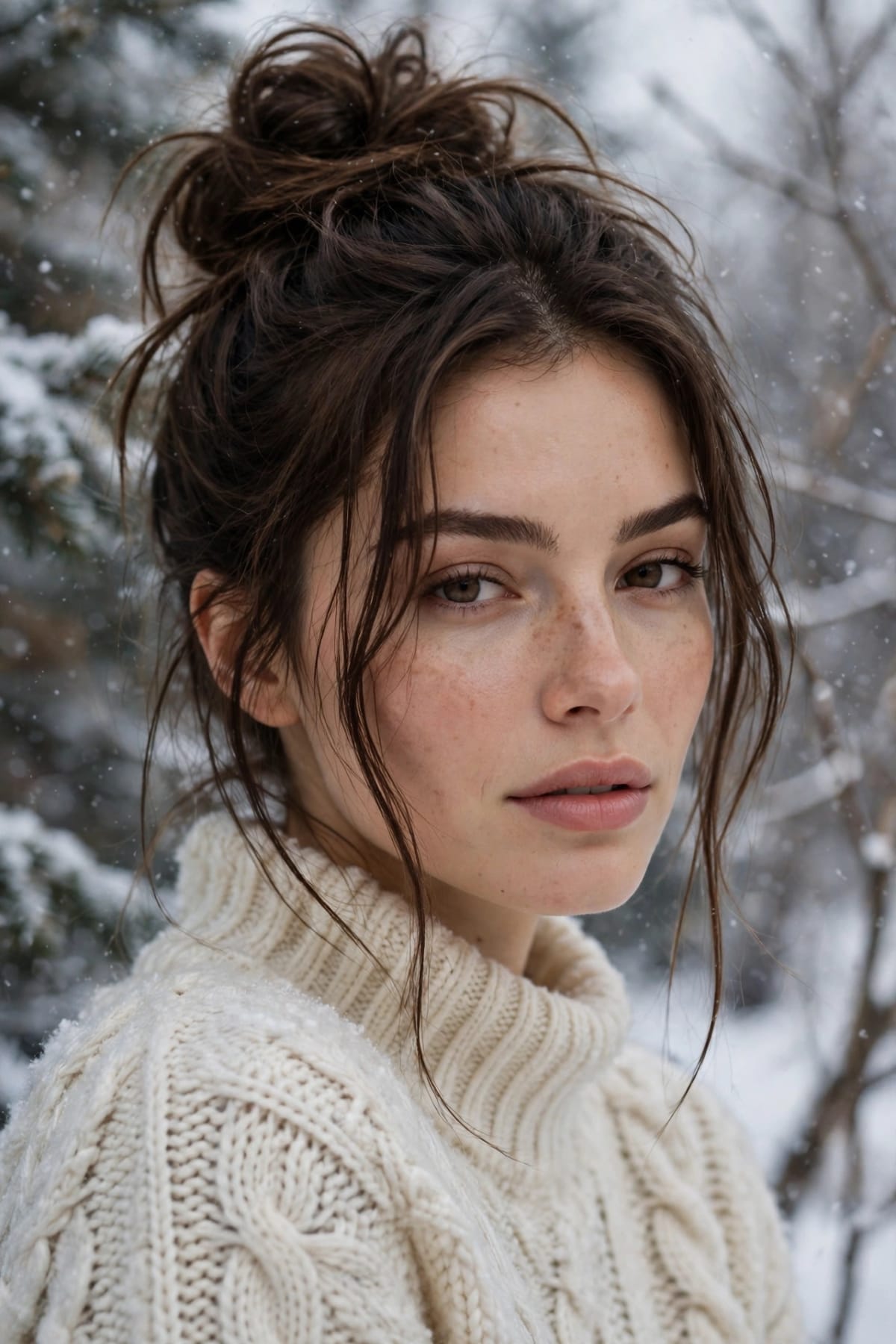
The messy high bun is winter's ultimate effortless style. Hair is gathered loosely at the crown into a soft, textured knot, with face-framing strands left loose around the temples. A brunette base with lighter pieces around the face adds dimension, and the undone texture keeps the look relaxed rather than severe. Because the bun sits high, it elongates the neck and works with everything from turtlenecks to evening dresses.
It tends to flatter most face shapes — the loose strands soften the hairline — and it is especially forgiving on second-day hair, when natural texture gives the bun more grip and character. This is a style that looks better when it is not overworked, which makes it ideal for busy winter days when you still want to look put together.
To style it, pull the hair into a high ponytail, twist loosely, wrap it around the base, and pin — then deliberately pull a few pieces loose at the front and tug at the bun for softness. A light texturising spray helps fine or silky hair hold the shape. The main trade-off is security: the looser and messier the bun, the more likely it is to sag by evening, so anchor it well with pins if you need it to last. Very formal occasions may call for a sleeker finish, but for everyday winter wear, this is one of the lowest-effort, highest-reward styles available. It also sits comfortably under a hat, since the hair is already lifted off the neck.
15. Long Layered Hair with Warm Winter Balayage
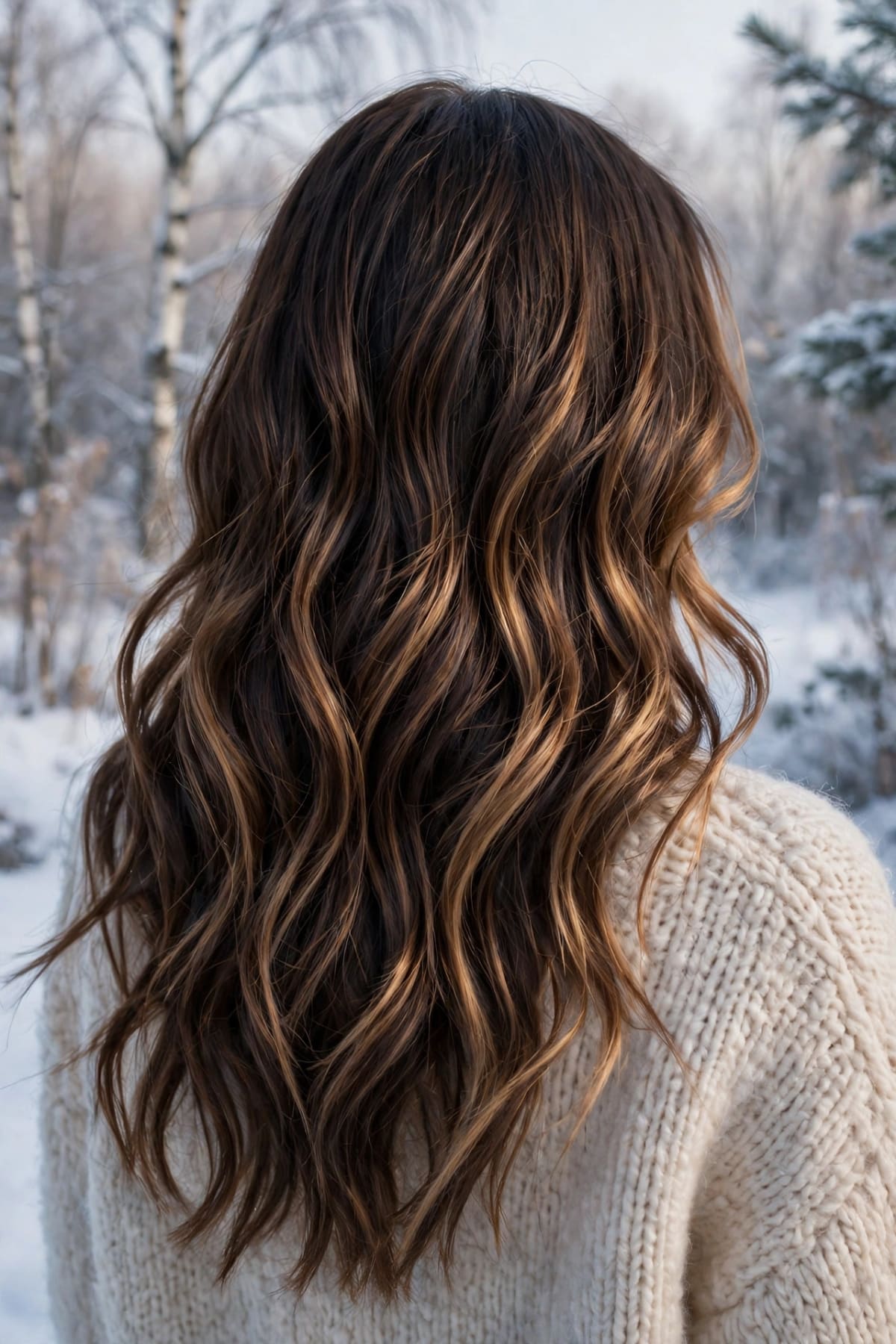
Warm balayage is the colour story of winter: a deep brunette base melted into ribbons of chocolate, caramel, and honey through the mid-lengths and ends. On long, layered hair worn in soft waves, the colour placement creates movement and depth that flat, one-process colour cannot. The warm undertones are especially flattering on warm and neutral skin tones, adding a glow that counteracts winter's pale light. Long layers keep the ends from looking heavy while letting the balayage pieces fall naturally around the face and shoulders.
This is less a hairstyle than a colour-and-cut combination, but it changes how every winter style looks, from a simple ponytail to loose waves. The dimension in the colour makes braids, twists, and curls easier to see, and the warmth keeps the hair from looking flat under grey skies or indoor lighting.
At the salon, ask for a warm brunette balayage with face-framing lightness and a low-maintenance grow-out — the hand-painted technique means no harsh regrowth line. Upkeep is moderate: a gloss or toner refresh every six to eight weeks keeps the warmth rich rather than brassy, and colour-safe shampoo plus a weekly mask protect the lightened ends from winter dryness. The trade-offs are cost and commitment — balayage is a multi-hour appointment — and warm tones can shift brassy without toning. For those who want dimension without the maintenance of traditional highlights, though, it is one of the most forgiving colour services.
16. Rope-Braid Ponytail with Soft Wavy Lengths
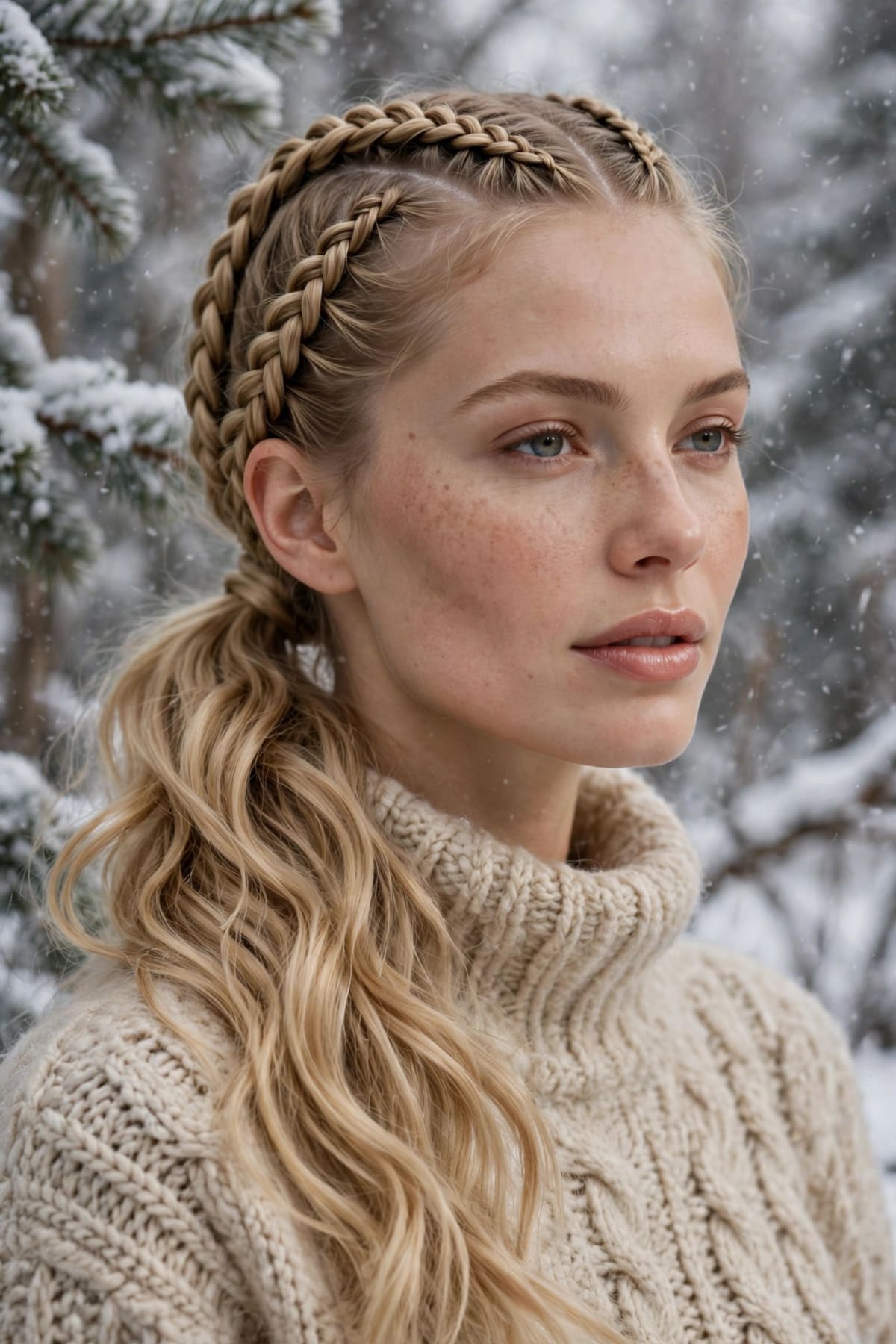
A rope-braid ponytail gets its character from two-strand twists worked along each side of the scalp and gathered into a low pony, with a small wrapped section hiding the base. The remaining length falls in long, soft waves, so the style balances structure at the crown with movement at the ends. It is a practical winter choice: the braided crown keeps hair controlled under scarves, hats, and coats, while the wavy tail keeps it from looking severe.
It suits medium-to-thick long hair best, since rope braids need some density to look substantial, and it flatters oval and heart-shaped faces with its lifted, face-opening effect. The overall impression is neat and intentional, but softer than a fully slicked-back ponytail.
The technique is simpler than it looks: part the hair, create a rope braid — two sections twisted around each other — on each side from temple to nape, then join everything into a low ponytail and wrap a strand around the elastic. Fine hair benefits from a texturising spray for grip before braiding. This is a realistic DIY style with no salon visit required, though a stylist can refine it for events. The trade-offs are tension and unravelling — rope braids pulled too tight can stress the hairline, and the twists need a secure elastic at the join or they will loosen through the day. Keep the first twists gentle and check the join before you head out.
17. Vintage Hollywood waves with a deep side part
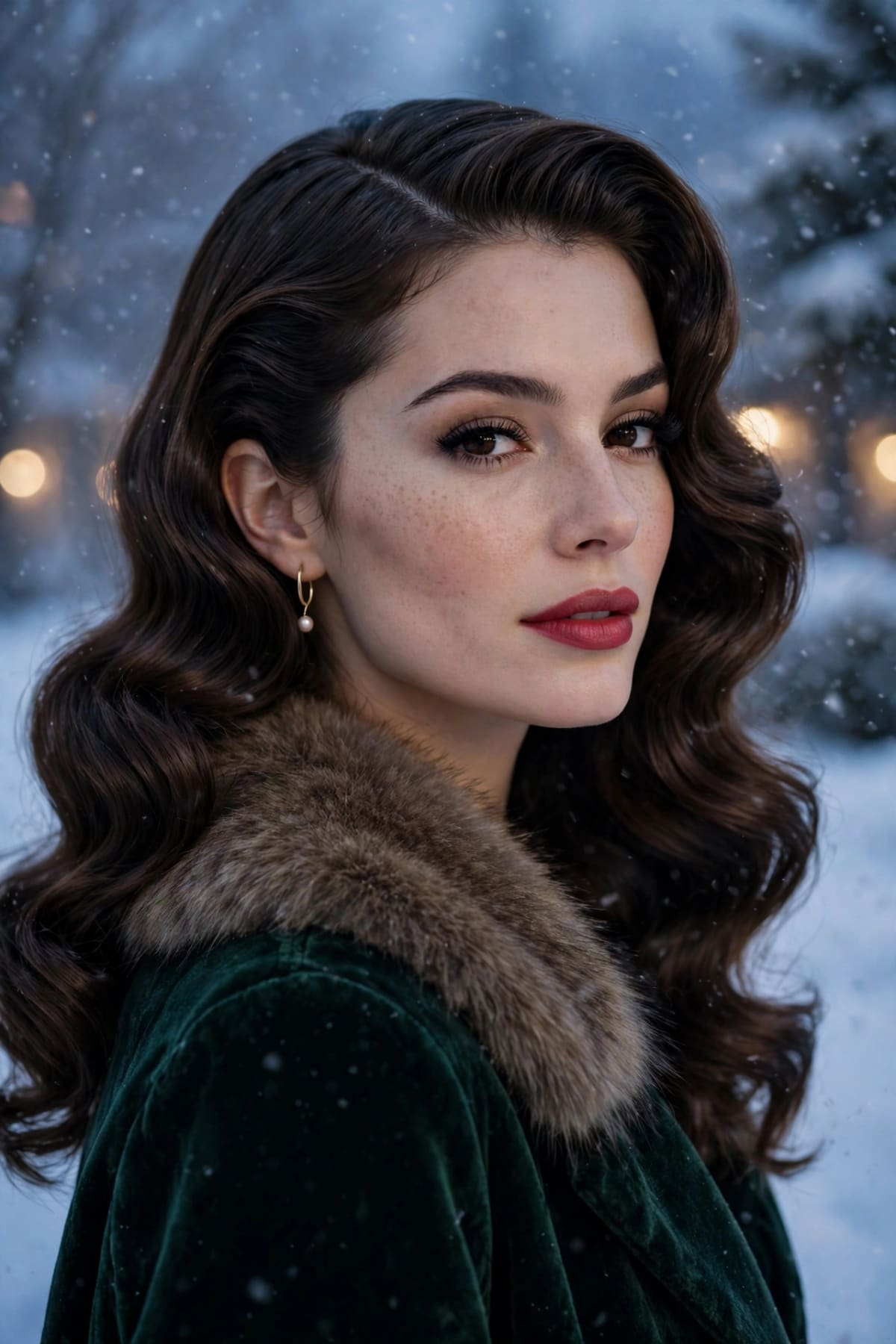
Vintage Hollywood waves bring old-Hollywood drama to winter weddings and holiday parties. This look is built on long, one-length or lightly layered hair in a rich brunette shade, styled into uniform S-shaped waves with a polished, mirror-like finish. The deep side part sweeps one side of the waves across the face while the bulk of the length falls over one shoulder, which gives the silhouette its signature drama.
It suits medium-to-thick hair best, since the waves need density to hold their sculpted shape, and it flatters most face shapes because the side sweep softens the forehead and cheek line. The visible finish is glossy and controlled rather than tousled, so the overall effect reads formal and romantic — a natural fit for evening events in the colder months.
The technique relies on pin curls or a large-barrel curling iron: sections are curled in the same direction, then brushed out gently with a boar-bristle brush and set with a light-to-medium hold spray so the ridges stay smooth. A salon blowout with a vintage wave set can help, because getting the waves to fall in one continuous pattern takes practice, but it can be done at home with hot rollers and patience. Upkeep is simple since there is no colour work — the trade-off is that the set tends to relax by the next day, especially in humidity, so a silk scarf wrap at night helps preserve the pattern. Trim every eight to ten weeks to keep the ends blunt enough for the waves to look uniform.
18. Sleek knotted low bun with a cozy winter scarf
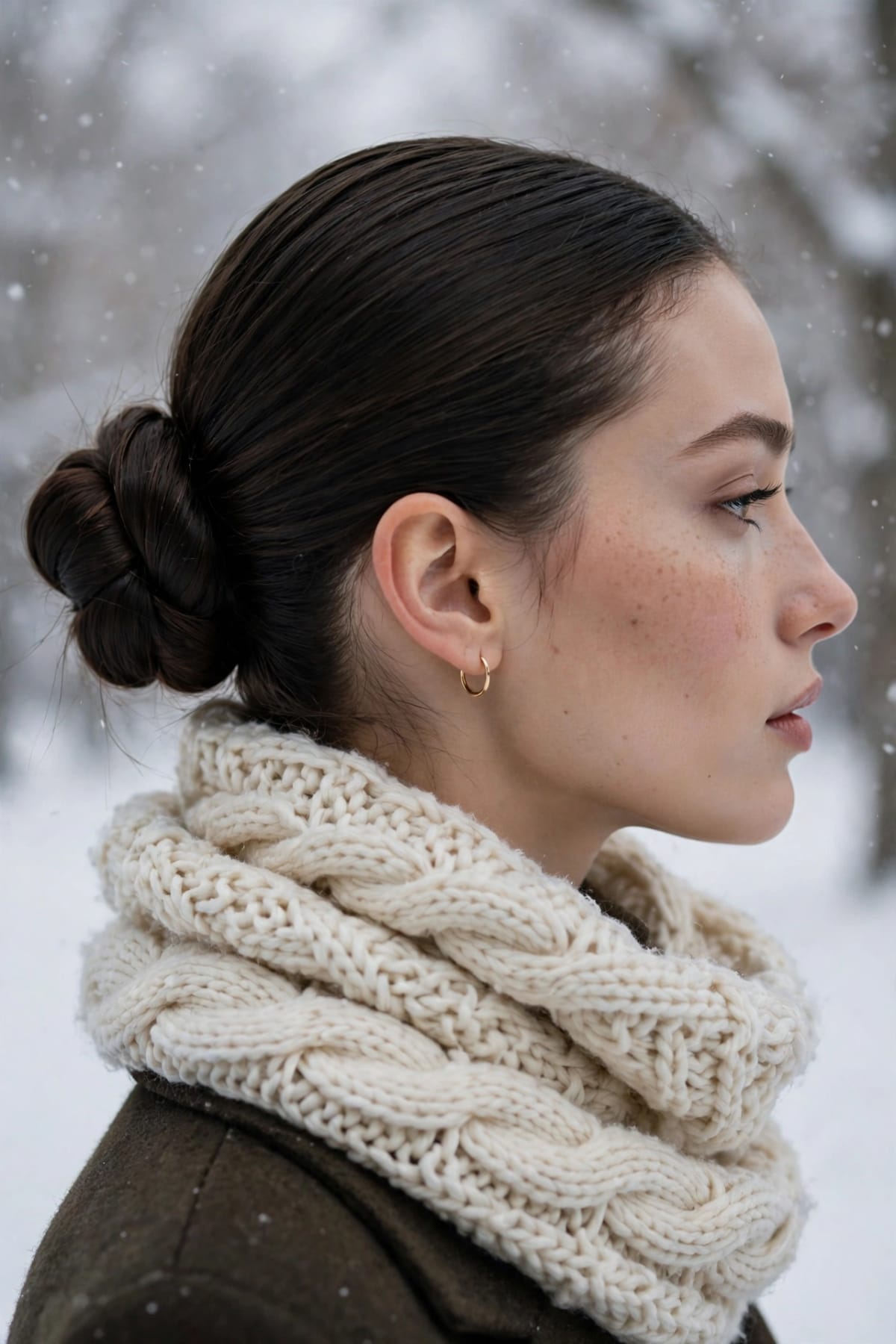
A sleek knotted low bun is refined winter elegance in its simplest form. Long hair is smoothed into a neat, compact knot sitting low at the nape, with a polished, almost sculpted finish. Dark brown lengths with lighter caramel pieces swept through the front give the style quiet dimension, and a chunky wrapped scarf at the neckline frames the bun beautifully — the whole composition reads as polished and tucked away.
This works on most textures and densities, though naturally sleek or straightened hair gets the smoothest result; fine hair may need a little texturising spray so the knot holds. The low placement keeps the profile clean from the front, so it suits office days, dinners, and any winter outing where hair needs to stay neatly above coat collars. It is especially handy on second- or third-day hair, since the slight oiliness actually helps the knot grip.
To build it, pull the hair into a low ponytail, twist the length around its own base, and pin it into a tight, smooth knot — a smoothing serum or light gel on the lengths keeps the surface sleek. Asking a stylist is not usually necessary, though a salon blowout can help because smooth roots make the knot sit neater. Pair it with a chunky knit scarf wrapped at the neck to complete the winter look. The trade-off is that very tight, smooth buns can slip on silky hair, so anchor with pins and finish with a firm-hold spray. No special maintenance schedule applies beyond regular trims; keep earrings simple so the clean lines of the style stay the focal point.
19. Waterfall braid with loose cascading lengths
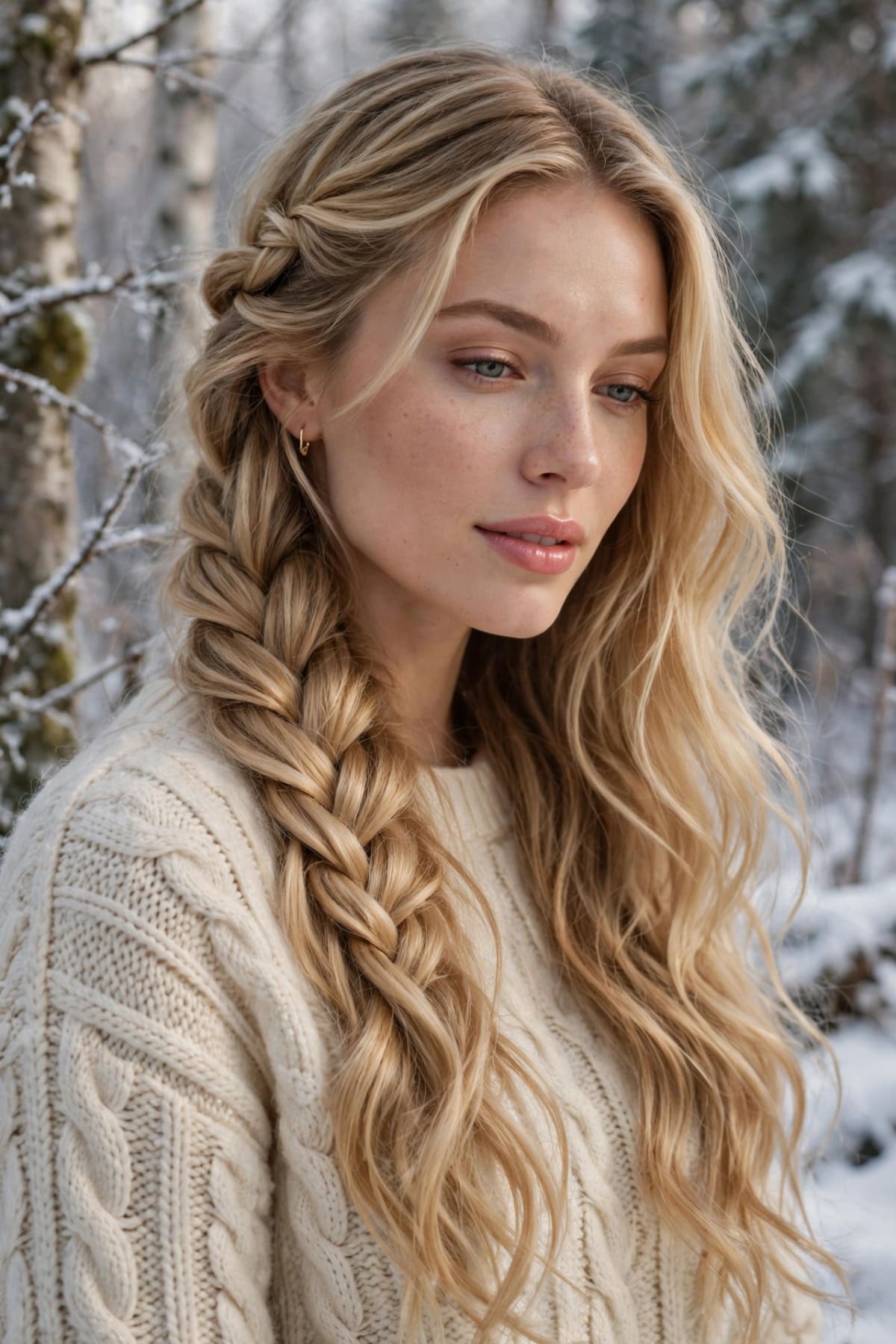
A waterfall braid is a romantic winter choice because it lets strands fall through a horizontal braid like a cascade, while the remaining length stays loose and smooth below. The effect is delicate and photo-ready without committing to a full updo. Long, mostly one-length hair works best, with a waterfall braid worked horizontally across the crown, letting strands drop through the braid while the rest of the hair falls freely.
Blonde hair with soft dimension makes the braid's weaving easier to see — on darker or solid colours the same structure looks subtler and softer. It suits straight to lightly wavy textures and needs real length, generally past the shoulders, for the braid to travel a full arc. The effect is romantic and delicate, so it works well for winter gatherings, holiday photos, and any occasion that calls for something prettier than a basic braid. Round and heart-shaped faces benefit from the diagonal line the braid draws across the hair.
The technique is a French or Dutch braid variation where one strand is dropped and a new one picked up at each stitch, creating the falling-strand effect. A stylist can set it in minutes at a salon blowout appointment, and at home it helps to work with lightly texturised or second-day hair so the sections grip. The main trade-off is longevity: the dropped strands tend to loosen and frizz by evening, so a flexible-hold spray is needed and this is not the style for a windy day. There is no special trim or colour schedule tied to it — just keep the ends neat, since ragged ends show clearly against the smooth falling lengths.
20. Sleek center-part with a glassy straight finish
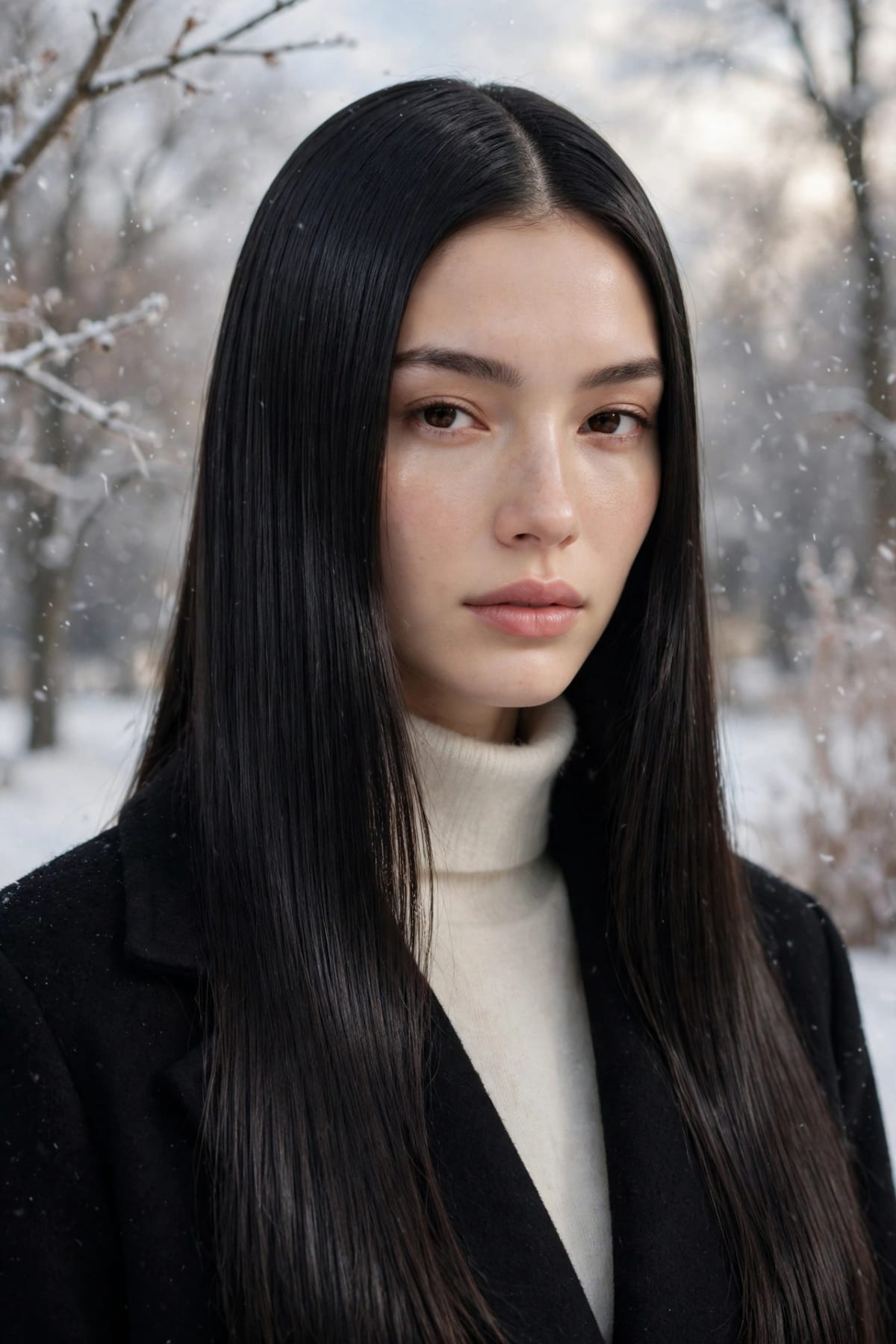
A sleek centre part with a glassy straight finish is a minimal winter choice that relies on precision rather than decoration. The foundation is long, straight hair — here in a deep natural black — with a precise centre part and a glass-like, reflective finish that reads polished from every angle. The lengths fall loose in front of the shoulders, but the same cut also looks sharp with the front sections tucked behind the ears, which opens up the face and shows off earrings.
It suits straight or straightened textures best and flatters oval, round, and heart-shaped faces, since the symmetrical part creates balance. The overall effect is minimal and confident, making it a strong choice for winter workdays and evenings alike — it also photographs beautifully under low winter light. No bangs or visible layers are needed; the cut relies on blunt, healthy ends.
A salon silk-press or keratin treatment can help because they create the flat, frizz-free base this style depends on, though a good flat iron and smoothing serum can do it at home. The styling routine is straightforward: part precisely while the hair is damp, blow-dry smooth with a paddle brush, then pass a flat iron through small sections and finish with a shine serum — a drop only, or fine hair will look greasy. The trade-off is upkeep: roots show growth lines quickly on such a sleek style, and the finish dulls after one wash, so expect to re-smooth or re-wash every few days. Trims every eight weeks keep the ends blunt enough for the glassy effect to hold.
21. Chunky twin braids with an outdoor-ready finish
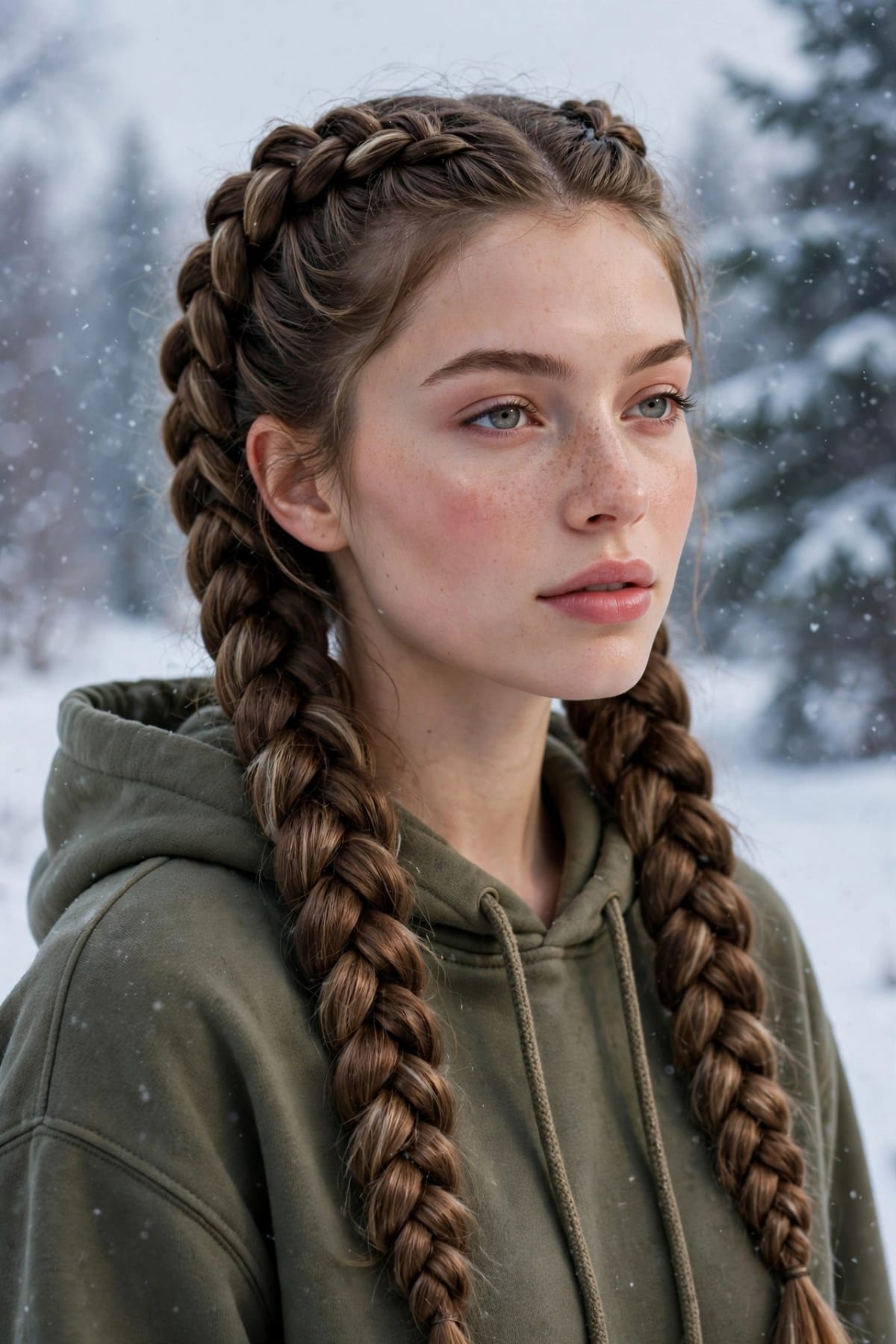
Chunky twin braids are a practical winter choice for active days, because splitting the hair into two full Dutch braids keeps everything contained and tangle-free under hats or hoods. In this version, long hair is divided down the middle into two chunky Dutch braids worn down the back, in a warm medium-brown shade. The braids are kept full and slightly relaxed rather than pulled tight, which gives them volume and keeps them comfortable under hats or hoods.
The style suits all densities — thin hair can be pancaked gently to look fuller — and works on straight, wavy, or textured hair. It is made for active winter days: skiing, snowshoeing, sledding, or just commuting in wind, since everything stays contained and tangle-free. Face-framing wisps left out soften the look and keep it from reading too sporty if worn into town afterward.
The technique is a standard Dutch braid on each side of a centre part, starting at the crown and adding hair as you work down, then securing with a small elastic and stretching the braid's edges for fullness. No salon visit is required — it is a fully DIY style that gets neater with practice. The trade-offs are minor: very curly hair may need a smoothing blow-dry first for even braiding, and tight braiding at the scalp can cause tension headaches, so keep the first few stitches loose. For winter care, a leave-in conditioner under the braids helps protect the ends from dry air, and trims every ten to twelve weeks keep the ends from fraying through the braid.
22. Textured long shag with a soft curtain fringe
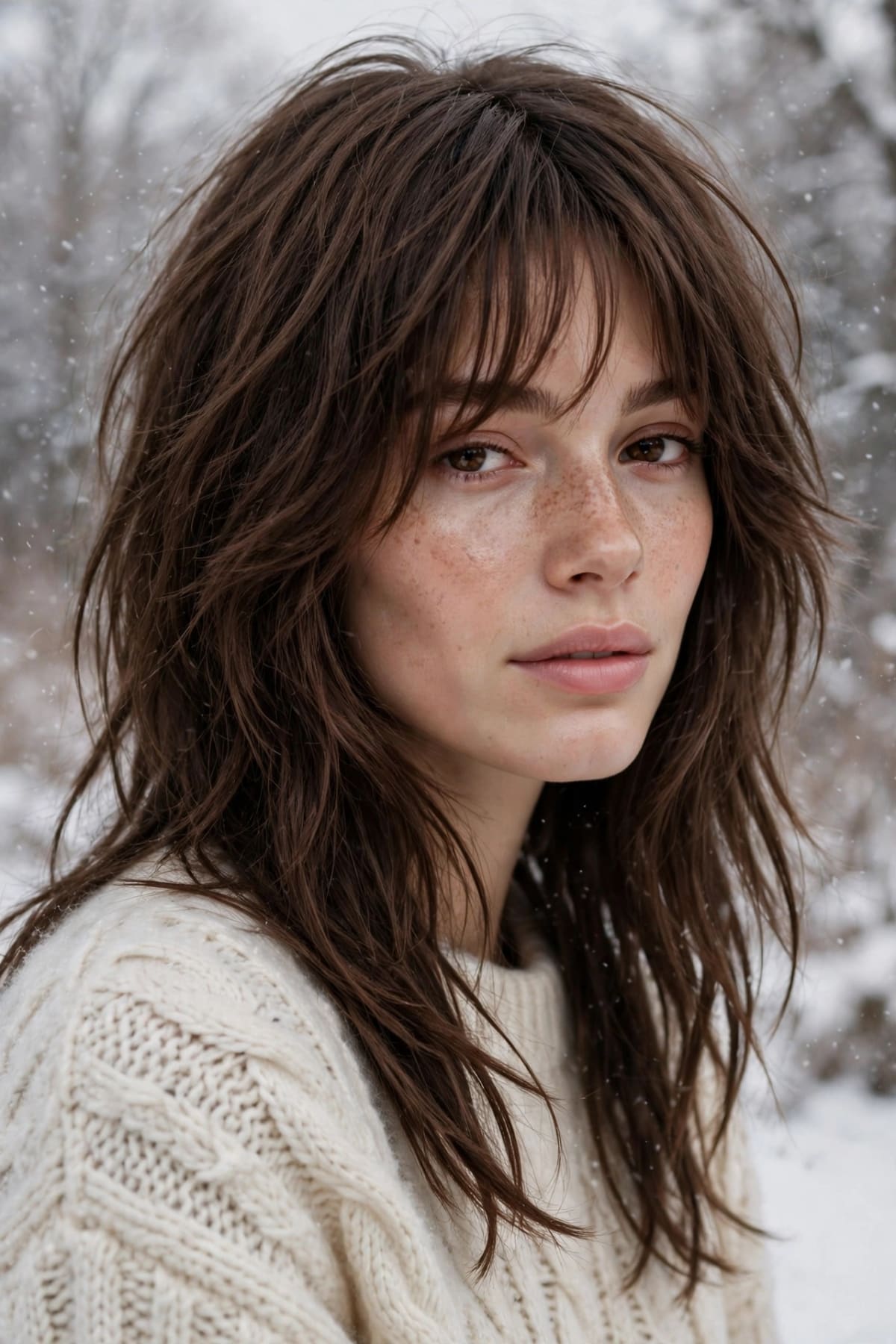
A textured long shag is an effortless winter cut for long hair, because the interior layers remove weight and encourage airiness while the centre-parted fringe blends into face-framing pieces. Lengths fall past the shoulders with lots of interior texture and soft, feathered layering, topped with a curtain fringe that parts in the middle and blends into the sides. A solid chocolate-brown base, rather than highlighted hair, lets the cut's shape do the talking.
It suits medium-to-thick hair with natural wave or movement — the layers remove weight and encourage airiness — and the fringe's centre part flatters round and square faces by drawing the eye down. The finish is undone and touchable rather than polished, giving that effortless, lived-in look that pairs well with winter's casual knits and coats. It is a good pick for anyone who wants shape and movement without sacrificing length.
At the salon, ask for long layers with lots of texture through the mid-lengths and ends plus a soft curtain fringe that blends into face-framing pieces — bringing a reference photo helps, since "shag" can mean different things to different stylists. Day-to-day styling is low effort: air-dry with a little texture cream or rough-dry with a diffuser, and the fringe tends to fall into place on its own. The trade-off is that the layers grow out unevenly, so plan trims every six to eight weeks to keep the fringe and layering intentional rather than scraggly. Fine hair can wear a lighter version, but ask the stylist to keep the layering minimal so the ends do not look thin.
23. Elegant twisted low ponytail with face-framing fringe
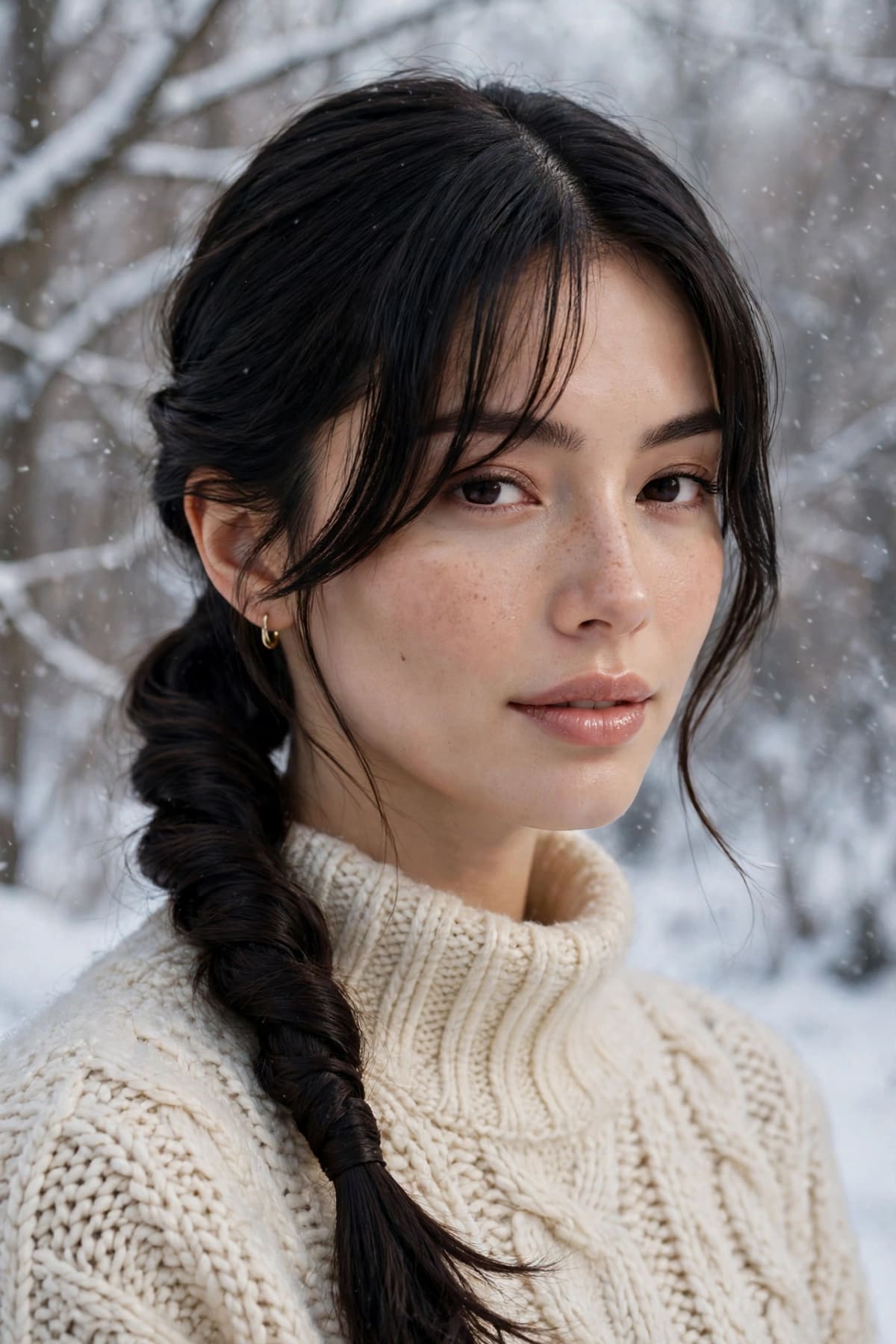
An elegant twisted low ponytail is a refined winter choice because gathering the hair low at the nape and twisting sections into a rope-like effect gives a dressy, dimensional finish, while the soft curtain fringe keeps the look elegant rather than severe. This polished style gathers long dark hair into a low ponytail at the nape, then twists and wraps sections around each other to create a rope-like, dimensional effect down the length. The smooth crown gives it a formal finish, and the fringe frames the face gently.
It suits straight to wavy hair in medium-to-thick densities, since the twists need enough hair to look substantial. The overall effect is refined and dressy — well suited to winter weddings, holiday dinners, and office parties where an updo feels like too much but loose hair feels too little. Oval and long face shapes are especially flattered by the low placement paired with the fringe.
The technique starts with a smooth blowout, then the ponytail is divided and twisted in sections, with small elastics or pins hidden under wrapped hair to secure each segment. A salon stylist may be worth it for a special event because keeping the twists even and the crown smooth takes practice, but it is achievable at home with a mirror and patience. The main trade-off is time — expect fifteen to twenty-five minutes — and the twists can loosen by evening, so finish with a medium-hold spray. Upkeep follows the usual rhythm: trims every eight to ten weeks, and since the style shows off the full length, keeping the ends moisturised through winter dryness makes a visible difference.
24. Loose long waves with a hat-friendly finish
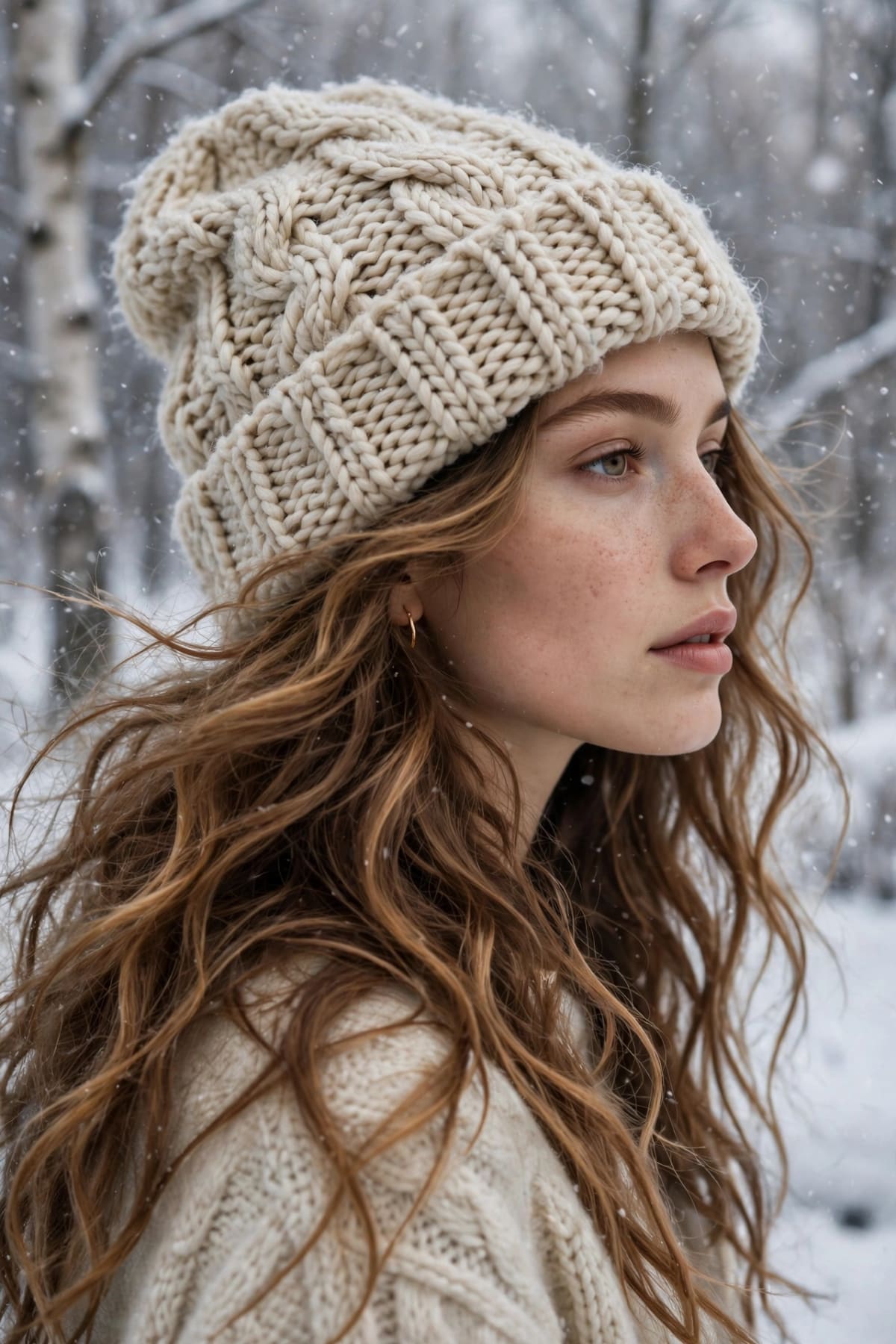
Loose long waves with a hat-friendly finish are the most practical winter look for long hair, because keeping the crown smooth and flat lets a chunky knit beanie sit comfortably, while waves starting around cheekbone level fall forward over the shoulders instead of bunching under the hat's brim. The style is simply long, loose waves — here in a highlighted brunette — worn down with the crown kept smooth and flat enough to sit comfortably under a beanie.
It suits wavy and wavy-straight textures best, since the goal is hair that looks intentional when the hat comes off instead of flattened at the roots. The overall effect is casual and wintry, made for everyday cold-weather life: errands, coffee runs, and walks where a hat is non-negotiable but the hair still needs to look good after. Most face shapes work with it, and the beanie placement can be adjusted to flatter the forehead.
The technique is to blow-dry the roots flat and smooth — a salon blowout can help because volume at the crown is the enemy of a good hat fit — then add loose bends with a curling iron from the mid-lengths down and break them up with your fingers. An anti-static serum or dryer sheet run over the crown helps, since knit hats and dry winter air tend to create flyaways. The trade-off is that hats will always flatten some volume, so this style leans into that reality rather than fighting it; skip heavy mousse at the roots. Trims every eight to twelve weeks keep the waved ends from looking thin, and a deep-conditioning treatment mid-winter helps the lengths stay soft under wool.
Final Thoughts
The strongest winter options for long hair work because of structure and protection, not simply because they are long. Braids and twists protect the ends from coats and zippers, low buns and tucked finishes survive hats, and gloss or softness comes from managing winter dryness rather than fighting it. Choose based on your maintenance level, how often you wear a hat, and whether you want your length protected or on display — and give any new style a full week of real winter days before deciding it is not for you.
Trim every six to eight weeks to keep the shape sharp.
Use a heat protectant before every hot-tool session.
Tone blonde or highlighted hair every six weeks to keep brassiness away.
Match the upkeep schedule to your routine before committing to high-maintenance colour.
The best winter style is the one that still looks intentional at the end of a cold, busy day — and still feels comfortable enough to wear again tomorrow.

BeautyFits Admin
The editorial team at BeautyFits.
Comments (0)
Be the first to comment.
Leave a comment